Books of the Year 2019

tobias-fischer-ljp-ewA23lc-unsplash

(photo: Tobias Fischer on Unsplash)

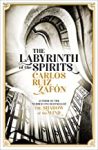
I’ve previously devoured the books in Carlos Ruiz Zafón’s Cemetery of Forgotten Books series (The Shadow of the Wind, The Angel’s Game and The Prisoner of Heaven). Set in Barcelona before, during and after the Spanish Civil War, they are gripping literary thrillers, and the latest instalment, The Labyrinth of the Spirits (Weidenfeld & Nicolson), didn’t disappoint. The books can be read in any order, and for sheer storytelling exuberance they are hard to beat.
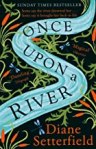
Diane Setterfield made her name with two wonderful gothic mysteries, The Thirteenth Tale and Bellman and Black. Her new novel, Once Upon a River (Doubleday), has a very different but equally evocative atmosphere. At an ancient inn near the Thames in Oxfordshire, the locals pass the time telling stories, but one night they witness something far stranger than any story they can tell: a drowned young girl is pulled out of the river and brought to the inn, only to wake a few hours later.
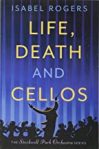
Two really enjoyable debuts: Isabel Rogers’ Life, Death and Cellos (Farrago) is a very funny tale of musical shenanigans set in the febrile atmosphere of the Stockwell Park Orchestra, while Rónán Hession’s Leonard and Hungry Paul (Bluemoose) is a charming and poignant story of two friends seeking to make sense of a confusing world.

Zoë Folbigg’s The Postcard (Aria) is the highly entertaining sequel to her bestselling novel The Note, based on the true-life story of how she met her husband. In The Postcard, Maya and James set off on a round-the-world trip, which tests their relationship to the limits. There’s a particularly grim description of a claustrophobic journey in the luggage rack of an Indian bus which has stuck with me long after reading it, and made me very glad that my backpacking days are long behind me.

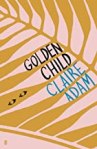
Golden Child by Claire Adam (Faber) tells the story of twin boys in Trinidad, one of whom is considered a genius, while the other is seen as a bit odd. When one of them is kidnapped, it opens up huge fissures in the family. This was one of the most disturbing and affecting novels I have read in a long time, a real gut-wrencher, and hugely deserving of this year’s Desmond Elliott Prize.
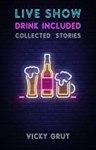
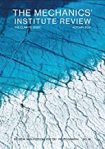
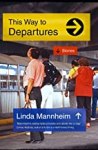
Several short story collections stood out this year. Vicky Grut’s Live Show, Drink Included (Holland Park Press) was shortlisted for the Edge Hill Prize and comprises stories published over a period of almost thirty years. One of the stories, ‘On the Way to the Church’, also featured in this year’s Best British Short Stories (Salt). Linda Mannheim’s This Way to Departures (Influx), Being Various: New Irish Short Stories edited by Lucy Caldwell (Faber), and the latest Mechanics’ Institute Review anthology featured some outstanding examples of the genre.
Szirtes

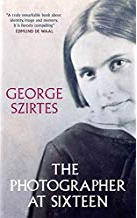
But my book the year is the only non-fiction title in this list: George Szirtes’ The Photographer at Sixteen (MacLehose), a memoir told backwards from the moment of Szirtes’ mother’s death in the 1970s. As we go back in time, we are drawn into some of the most horrific events of the twentieth century, including the Hungarian uprising against communist rule and the Holocaust. It’s a profound book about memory and family, and utterly compelling.

Books of the Year

cesar-viteri-426877-unsplash

(Photo by César Viteri on Unsplash)

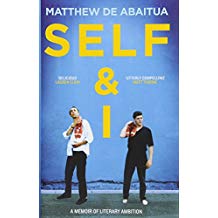
First up is the only work of non-fiction that really got me excited this year: Matthew De Abaitua’s Self and I, an account of the time the author spent working as an amanuensis to Will Self back in 1994. The title is, of course, a nod to Withnail and I, and Self’s capriciousness is certainly Withnail-esque. Self often gets a bad press, and De Abaitua doesn’t downplay his idiosyncracies, but he comes across as a highly sympathetic character. Really, though, it’s an account of how De Abaitua tried to get his own literary ambitions going, and any would-be writer will empathise with the long, frustrating and often humiliating experience that entails.

Self and IBest British Short Stories

Now on to the fiction. I’m a great admirer of what Salt Publishing do – they have a wonderfully eclectic and risk-taking list to which I return to again and again. The annual Best British Short Stories, edited by Nicholas Royle, is always great value, and the 2018 edition opened with one of the best stories I’ve read in some considerable time: ‘Paymon’s Trio’ by Colette de Curzon, a tale about a demonic music score. The story of how it came to be published is equally compelling: it was written in 1949 when the author was 22, but because she didn’t know anything about the publishing world and how to get published, she put away in a folder until her daughter found it 67 years later. She lived long enough to see it published as a chapbook by Nightjar Press before passing away in March this year.

The ChameleonThe Hoarder

Salt get a very big tick from me for publishing the always excellent Alice Thompson – she didn’t have a book out this year, but I read and loved her 2010 novel The Existential Detective. Salt did give us Samuel Fisher’s novel The Chameleon in 2018. Narrated by a book that can change its cover to blend in to any given situation, the story is both a poignant account of a man on his deathbed and a gripping spy thriller set in Cold War-era Russia.

I was surprised by Jess Kidd’s The Hoarder – not having read any of its reviews or any of her previous work, I picked it up thinking it would be a work of high gothic mystery (a genre I absolutely love). To a certain extent it is – there’s a big sprawling house full of secrets – but it’s got a fantastic blend of dark and knockabout humour that I wasn’t at all expecting. The narrator is often accompanied by apparitions of saints, who comment on her every move – St George is there clad in his armour, while St Valentine observes her attempts at getting a relationship going.

Perfidious AlbionOur Child of the Stars

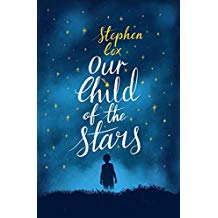
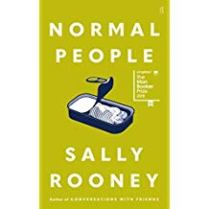
In my day job as a freelance copy editor and proofreader I’ve worked on some fantastic novels this year. Sam Byers’ Perfidious Albion is a fabulous post-Brexit satire that had me laughing out loud at my desk (great cover too), while Stephen Cox’s Our Child of the Stars is a moving work of sci-fi/fantasy that imagines an orphan alien adopted by an American couple. Sally Rooney’s Normal People has rightly garnered much praise – an intricate and intimate portrayal of a young man and woman and their on-off relationship as they navigate the awkward years of school and university.

RooneyCountry


Finally on to two novels set in Northern Ireland. Michael Hughes’s terrific Country re-imagines the Troubles as an Homeric epic, with an IRA sniper cast in the role of Achilles and his enemy, a British soldier named Henry, as Hector. I’ve banged on a fair bit both on this blog and on Twitter about the Booker winner, Anna Burns’s Milkman, so I won’t repeat myself here, except to say that I think it is one of the best novels I have read in years.

Milkman

Website Review: Jericho Writers

lauren-mancke-60627-unsplash

(Photo by Lauren Mancke on Unsplash)

Around the turn of the millennium I reached a crossroads with my writing. I had written two unpublished novels and was working on a third, one that I truly loved, but which was pushing me right up against the limits of my abilities. I knew I needed help, but had no idea where to turn.

That was when I discovered the Writers’ Workshop, run by the novelist Harry Bingham. Their website was full of useful information and I decided to get a critique of my novel from one of their editors. This was one of the best things I have done in my writing career. It gave me encouragement when I needed it most, and ideas for how to improve the book. And although that book has also not found a publisher, I did go on to secure an agent.

Accepting I needed help was one of the big lessons I learned, and it’s one that has stuck with me to this day. Even after over twenty years of pretty solid writing, I often feel as if I have no idea what I’m doing, and I’m still benefitting from the good advice that’s out there, if you know where to find it. Writers’ Workshop has recently morphed into Jericho Writers, and it remains one of the best writing sites around, though much has changed – not least the fact that there is now a members-only area, available via a paid subscription.

There is still lots of great advice available for free on the website. The Library section has posts such ‘How to Plot’ and ‘How to Get Published’, as well as ‘The 15 Most Common Mistakes Made By New Writers Writing Their First Novel’ (and this is not just for those writing their first novel).

The big question is whether the paid-for content provides value for money. I think it does. The members’ area includes videos from industry experts, including an entire ‘How to Write a Novel’ course, masterclasses on various writing techniques, such as creating vibrant characters, and a whole series on self-publishing. There are also in-depth interviews with agents, publishers and writers. The calibre of the contributors is high – for example, Debi Alper, one of the best editors in the game, provides a masterclass on how to edit your novel.

The ‘Conversations’ section allows members to pitch their novels live and direct to agents, while the ‘Ask Jericho’ feature gives members the opportunity to ask any question or to have their query letter evaluated. If you are looking for an agent, ‘Agent Match’ provides a database of agents, searchable on different criteria – size of agency, number of clients and so on. Members also receive discounts on the site’s other services, such as manuscript evaluation.

I have a couple of reservations. One is technical: if I go from the Members’ area to the free Library section, it logs me out of the Members’ section and I have to log back in again. The other is a slightly bigger niggle: the ‘Townhouse’ feature is a forum where members can discuss writing tips, agents and publishers, and self-publishing, and get peer review on their work. This was one of my favourite parts of the old Writers’ Workshop site, but putting it in the Members’ Area means that, currently, there are not the same numbers of people taking part. Obviously that will improve once the membership increases, but I did wonder if this was one area which would be more beneficial even to members if it was on the free part of the site. It’s a shame too that all the threads from the old site are no longer available.

Overall, though, compared with the cost of attending festivals and workshops, and especially compared with doing a creative writing MA, Jericho Writers offers a relatively inexpensive way of getting good-quality help. It’s like a whole festival of writing that you can enjoy in your own home, at your own pace.

Find out more about Jericho Writers here

Broadsword Calling Danny Boy

Geoff Dyer

It’s a long time since I last saw the film Where Eagles Dare – it was probably a rainy Sunday afternoon in the 1980s – but Geoff Dyer’s new book made me want to watch it all over again. His love for the film, formed when he first saw it as a boy, is everywhere evident in his scene-by-scene description, though he doesn’t take it too seriously. He admits that the plot is at times preposterous, with the rucksacks carried by the main characters seemingly bottomless and carrying endless supplies of explosives. He’s very funny too on the two lead actors, Clint Eastwood and Richard Burton, describing the trademark Eastwood squint as he lays waste to hordes of Nazis, and quoting Burton’s diaries, in which he wonders why he agreed to appear in such blockbusters when he could be winning Oscars instead. Read my Sunday Times review here

Matt Haig


At the age of twenty-four, suffering from depression, novelist Matt Haig stood at the edge of a cliff and almost threw himself over. Although he pulled back from suicide the episode heralded years of mental illness. Depression is, he wrote in Reasons to Stay Alive, ‘total exposure. A red-raw naked mind. A skinned personality.’

Haig has written perceptively about mental illness, and both Reasons to Stay Alive and his new book, Notes on a Nervous Planet, have been bestsellers. I reviewed Reasons to Stay Alive when it came out in 2015 (you can read that review here) and I recently reviewed Notes on a Nervous Planet for the Sunday Times – you can read the review here.

Louis de Bernières’ new book

So Much Life Left Over

Back in the 90s, when I was just starting out as a reviewer, the Sunday Times sent me a book called Captain Correlli’s Mandolin, which had just come out in paperback. At that time, Louis de Bernières was known for three magic realist novels set in South America, and Captain Correlli’s Mandolin had yet to become a bestseller. I no longer have my review of it, but I remember being bowled over. I like to think my enthusiastic review contributed in some small way to its massive success (spoiler: it probably didn’t).

This is a rather roundabout way of getting to his new novel, So Much Life Left Over. Having enjoyed his other books, I was very much looking forward to reading his new one, the second in a planned trilogy. You can read my review in the Literary Review here

A Couple of Reviews

Rock and Roll is Life

D. J. Taylor’s new novel follows the fortunes and misfortunes of fictional band the Helium Kids, who in the 60s were ‘only marginally less successful than the Beatles and the Rolling Stones’. It’s a funny, vibrant novel and you can read my review in the Literary Review here.


Ten Arguments

Ten Arguments for Deleting Your Social Media Accounts Right Now: Jaron Lanier was one of the pioneers of virtual reality technology, but now he spends much of his time railing against the dangers of the internet and, in this book, social media. I have a lot of sympathy for his viewpoint, as I have always been ambivalent about social media: I have no Facebook or Instagram account and came to Twitter very late. However, his book has not quite convinced me to delete my Twitter account. You can read my Sunday Times review here.

Reviews round-up

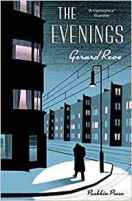
It occasionally happens that my reading for work pushes my reading for pleasure into the background. Recently I realised that I had inadvertently abandoned The Evenings by Gerard Reve. It had been moved some months ago from my to-be-read pile and shoved in a cupboard while other books took precedence. It was only when I saw a review of it in the Guardian the other day that I remembered I was halfway through it. Having picked it up again, I’m now trying to figure out who all the characters are and what on earth is going on in the plot.

evenings

Anyway, in between times I’ve reviewed the following books:

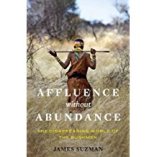
AffluenceGuernica


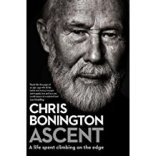
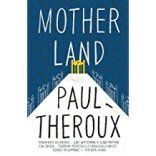
AscentMother Land

Affluence Without Abundance by James Suzman – a study of the San or Bushman tribes of Namibia, in which I learned that the San believe that white people’s hair makes them look like goats and that warthogs are ‘clever, sociable, and vengeful’. Review here

Guernica: Painting the End of the World – James Attlee’s account of Picasso’s monumental painting. Apparently, Jackson Pollock was so impressed by the painting that when he overheard a fellow artist criticising it he suggested they ‘step outside and fight it out’. Review here

Ascent: A Life Spent Climbing on the Edge by Chris Bonington, in which the great British mountaineer recounts peaks climbed and comrades lost. Review here

Fifty years after publishing his first novel, Paul Theroux has just published his 31st. Mother Land is a very funny book about a feuding Cape Cod family ruled by a monstrous matriarch. This review appears in the latest edition of the Literary Review here

Right, now back to The Evenings

My Father’s Wake

My Father's Wake


In this powerful memoir, Kevin Toolis contends that the Anglo-Saxon world has lost the art of mourning the dead, and that we should look to the way the Irish do it. Open caskets, touching the dead body, sitting in vigil by the coffin, playing sexually charged ‘wake games’ – all would help us come to terms with our mortality. You can read my Sunday Times review here