How I Wrote ‘Uffington’

I’ve loved the Uffington White Horse on the Oxfordshire/Berkshire border since I first visited as teenager. One of the many figures carved out of the chalk hillsides across southern England, it’s the only one that has been dated to prehistoric times. Nobody knows for certain who made it or what it represents, though some say it’s a depiction of Epona, the Celtic goddess of fertility.

Over the years I’ve tried to write about this place many times, but nothing quite gelled. Then I read that in previous centuries there was an annual ‘scouring’ of the horse – a clean-up operation to keep the figure free of weeds. This scouring would be accompanied by much debauchery. The work is still done annually by volunteers for the National Trust, with new chalk hammered into the ground to freshen up the whiteness, but without the debauchery.

It was this notion of ‘scouring’ that really caught my imagination. Could this be applied to a character, perhaps in the sense of metaphorically sloughing off skin to reveal a new identity underneath?

So, the story would be called ‘The Scouring’ and have that element in it, plus lots more – betrayal, affairs, strange apparitions, debauchery . . . I did draft after draft over a couple of years and by the time I’d finished, I thought it was the best thing I’d ever written.

But then several beta readers showed me that what I’d done was really not working at all.

Hard to take, of course, but once I’d licked my wounds I realised they were right. A line I once wrote in one of my many unpublished novels came back to me: ‘There are only three things wrong with this piece of writing: the beginning, the middle and the end.’

I went back to the drawing board, changed the title and the characters, and the whole premise. And the beginning, the middle and the end. The only thing that remained was the figure of the white horse itself.  

More drafts, and finally there was ‘Uffington’, which to my astonishment has won the HISSAC Short Story Competition. You can read it here: http://www.hissac.co.uk/uploads/Shorts2021.pdf
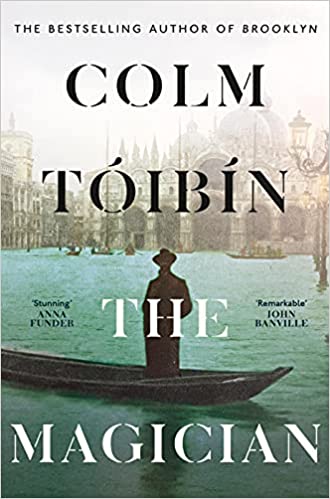

New year, new journal

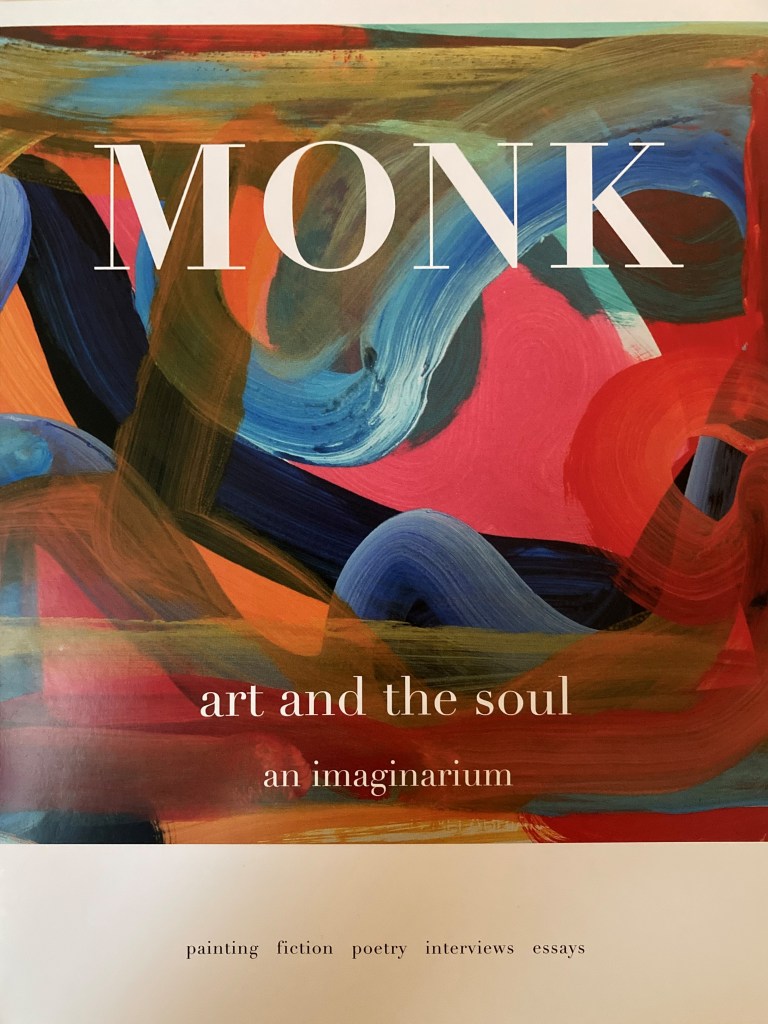
My first book post of 2021 was this stunning new journal MONK. It’s been online for a while now (three issues available at monk.gallery) but this is the first print issue.

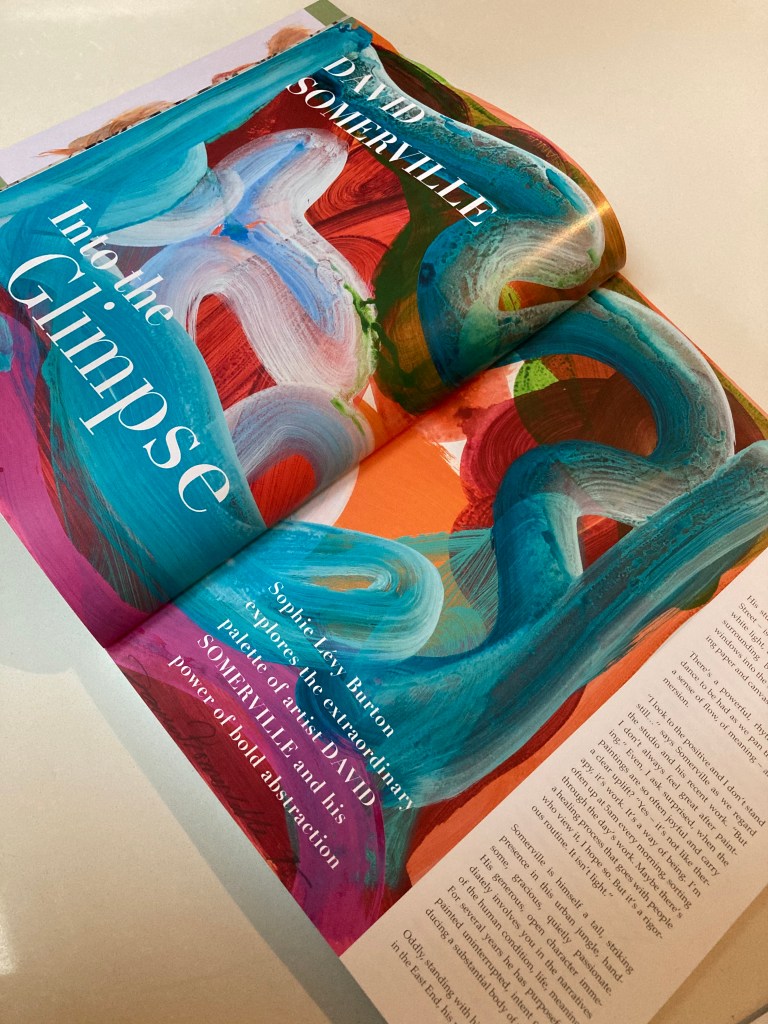
And what a delight it is. Beautifully designed, it features fiction and poetry, alongside interviews with artists such as David Somerville (who has provided the cover image), Bloodaxe Books publisher Neil Astley, and Rowan Williams, the former Archbishop of Canterbury.

Editor Sophie Lévy Burton writes in her Introduction that ‘MONK dances around the theology of creativity, of why we artists do what we do’. As a whole, the journal is a fascinating mix of art and spirituality, an ‘imaginarium’.

‘MONK dances around the theology of creativity, of why we artists do what we do’.

Sophie Lévy Burton, Editor

Restrictions permitting, MONK is available to buy in selected bookshops, but can also be ordered online. For further details, see http://monk.gallery/monk-anthology/

Cowboys and Croquet: How I Wrote ‘The Kid’

katie-burkhart-QuyLe826f1w-unsplash

(Photo by Katie Burkhart on Unsplash)

It began, as it often does, with a newspaper article. In 2010 a collector found a photograph that he believed showed Billy the Kid playing croquet with members of his gang. If true (and the jury is still out, I think) this would have been only the second authenticated photograph of The Kid. Even if it’s not him, I was struck by the fact that this game, which I’d always thought was only played by English people on immaculate lawns, was also popular in nineteenth-century America.

It’s these kinds of unexpected juxtapositions that often spark stories for me. I knew very little about Billy, and even less about American croquet, and I’d also never written a piece of historical fiction before, but I couldn’t get the image out of my head.

So I did some research. There’s not much historical information about croquet in America but it seems it was a reasonably popular game in the 1870s, including among poorer households and Native Americans. I found an interview with an artist who painted images of that period, including one of a Native American holding a croquet mallet. One thing I did discover was that Americans call the croquet hoops ‘wickets’.

There is of course a lot of information about Billy the Kid. His story has been told so many times already, including in the Young Guns film, that I wanted to try and find a different angle. I discovered that he had a younger brother called Joe, and I became interested in that dynamic – what did Joe think of his elder brother? If Billy was ‘the Kid’, what did that make his kid brother?

The story was beginning to come together, but it wasn’t until I found out that Billy had been employed by an English ranch owner that the final piece of the puzzle was in place. It was the murder of this Englishman by a rival gang that precipitated the sequence of bloody events that made Billy infamous (and led to his own death), so what if I set my story before all that kicked off, in the lull before that storm? And how would this upper-middle-class Englishman react to the notion of croquet being played by poor farmers in New Mexico, without a manicured lawn in sight?

It’s Joe’s story, really. It’s about the real kid and his mixed feelings regarding his elder brother, who has already killed a man. What does Joe want to do with his life? Does he want to stay and milk cows on a farm, or go off and lead a potentially much more exhilarating, but risky existence with his brother? This dilemma became the heart of the story.

You can read ‘The Kid’ here.


The Kid

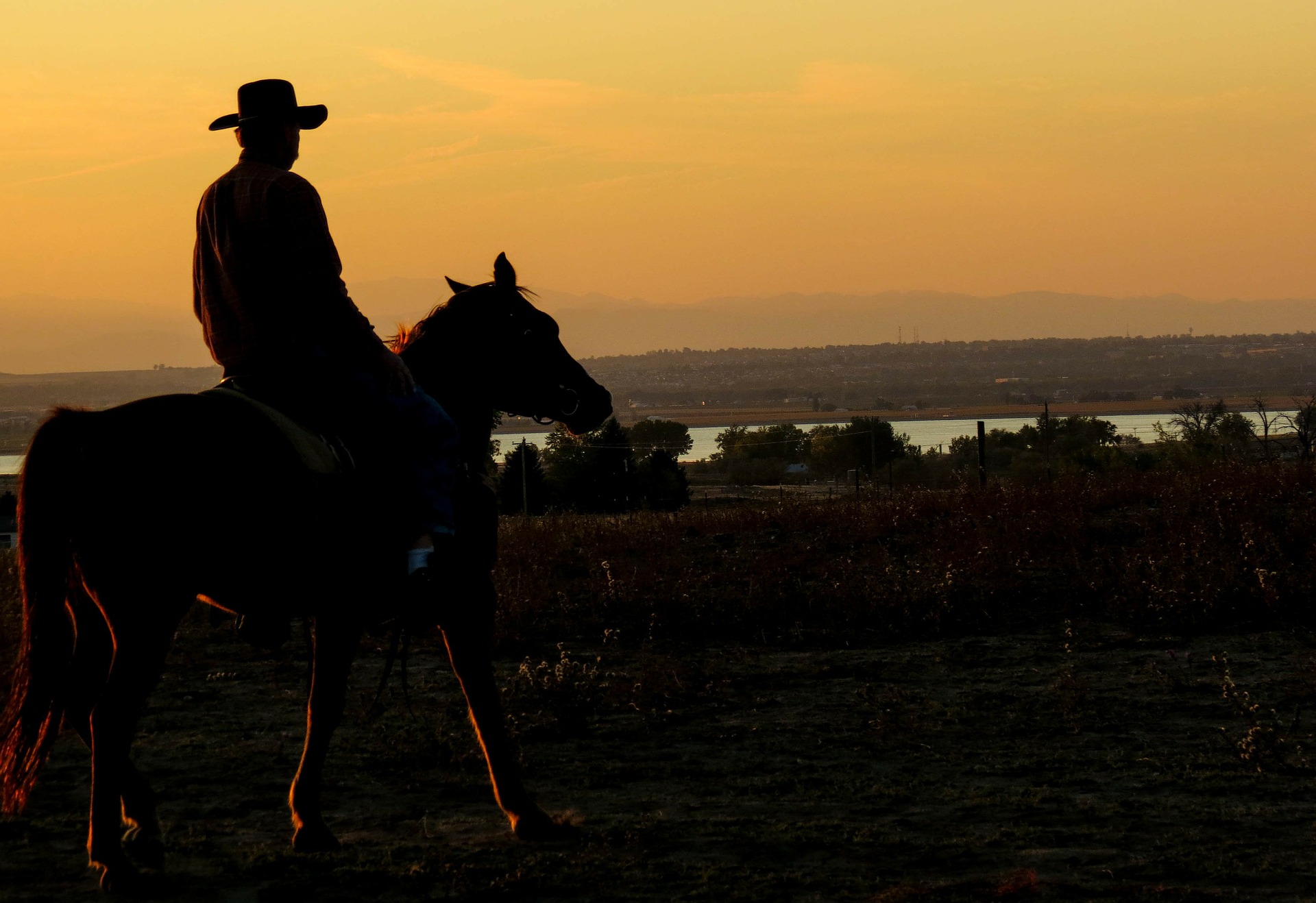
cowboy-283449_1920

(Image by Donna H from Pixabay)

Back in 2017 when I plucked up the courage to start writing and submitting short stories again after a 14-year hiatus, Storgy were the first literary magazine to take something by me (‘Mr DIY’). So I’m really pleased to have a new story published by them – and after a lifetime of writing contemporary stories, it’s my first piece of historical fiction. ‘The Kid’ is set in New Mexico, 1877, and you can read it here.