The Play Wot I Wrote Was Performed

pim-chu-245596

I mentioned in a previous post that I was going to have one of my plays, Table Manners, read out in front of an audience at the Player Playwrights group. I had no idea what to expect, but one thing I hadn’t expected was to be collared straight off by an audience member and told, ‘You do realise that Table Manners is the name of a play by Alan Ayckbourn?’

‘Er, no …’ I said.

‘It’s really famous,’ she said.

This was particularly embarrassing as I had seen quite a lot of Ayckbourn’s work, and had often thought of my play as Ayckbourn-esque. I’d envisaged it as a kind of middle-class equivalent of the kitchen-sink drama – a kitchen-table drama, if you will – with the action taking place around said piece of furniture. I’d thought the title was perfect and was dismayed to find that Ayckbourn had already nicked it.

So my play (title to be decided) was read out. It was excruciating at times to hear lines that had only existed in my head suddenly spoken out loud. The actors did a magnificent job wrestling with my often garbled syntax and ill-begotten metaphors. About halfway through Act I, I thought, Christ, this is dragging a bit. I kept my head down, for fear that I would see the audience nodding off. Things did improve somewhat. People laughed, and sometimes in the right places.

The custom at Player Playwrights is for the author to sit in front of the audience after the reading and be subjected to comments and suggestions and questions. Everybody was kind and generous, and only a few mentioned Alan Ayckbourn. Everybody then gave the play a mark out of 10 in categories such as Premise, Structure, Characters and Dialogue. My final average score came to 63.4%, which I thought was pretty good. Maybe a C grade in a particular generous exam year. I’ll take that.

Subsequently, the play has been longlisted for the Bread and Roses Theatre Playwriting Award, so clearly it must have something. It does need quite a lot of rewriting, though, especially in that draggy first act.

And, of course, it needs a new title. From now on, whenever I write a play, I will be checking it against the Ayckbourn oeuvre. He and I are clearly on the same wavelength.

Between Them

Richard Ford

Book reviewing might seem like a gentle occupation, but occasionally it can tip over into viciousness. After I wrote my review of Richard Ford’s new book, I read that he spat at Colson Whitehead because of a negative review Whitehead had written of a Ford book – in fact, Ford had waited many years to take his revenge. You can make your own minds up about whether I am likely to be on the receiving end of a Ford attack: my Sunday Times review is here


I Lived in a Travel Writer’s Shed

bradley-swenson-77389

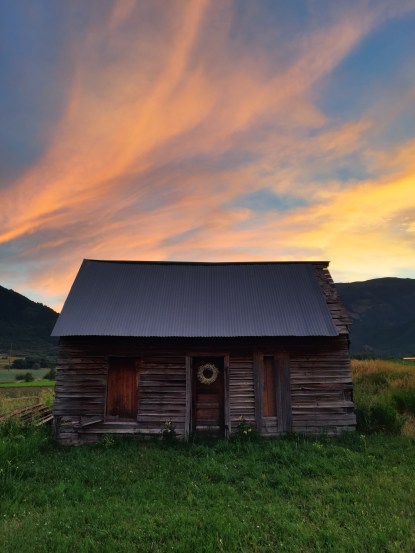
A long time ago, I answered an ad in the London Review of Books asking for a caretaker for an isolated cottage in the Scottish Highlands. The owner was a travel writer who was about to go abroad to research a book.

As it turned out, the cottage was already taken by an artist, but I was offered the owner’s writing shed instead. Looking for an opportunity to work on my own writing, I jumped at the chance.

The place was bigger than a garden shed, though not by much. There was a desk, and a sofa that converted into a small bed. A sink afforded a trickle of water. A wood-burning stove was the only source of heat. Just outside the door, an even smaller shed housed a chemical toilet.

I could see immediately that trying to write coherent sentences was not going to be my only challenge.

As well as the practical problems, there was the isolation, too. The cottage really was in the middle of nowhere. I had no idea where the nearest neighbour was. I certainly couldn’t see another house. Most days, I saw nobody. The artist took himself off with his easel almost every morning up into the Cairngorm mountains. My only companion was a semi-wild cat who, when he wasn’t scratching me, would stalk rabbits in the garden. I’d see him sometimes with his captured prey. He’d eat every last bit of the animal, fluffy bunny tail and all.

I tried to write. I could do this, I told myself – look at all the time I had! Eight hours a day, seven days a week. This was the very definition of being a full-time writer. This was the chance I had been longing for: just me and my laptop and my novel.

One week passed, then another. A month, two months. It rained. A lot. And snowed. I struggled to get the wood-burner going. Thinking it might keep me warm, I grew a terrible beard. Every day, I stared at the blank screen. I got distracted by an insect crawling up a grass stem outside the window. I chopped logs for the stove, and strode out on long walks, kept company only by the cloud of midges above my head. Sometimes they descended and bit me. I was glad of even that much interaction with a living creature.

By the end of the third month, I was talking to the cat and believing he understood me. I talked to the rabbits, warning them about the cat, but they didn’t listen. I started to drive the forty minutes into Aviemore almost every day just to be around people.

I headed home. My book was all but non-existent. Back in London, I did, eventually, finish it. I understood then that what I needed was not complete isolation, or endless days with nothing else to do. Without social interaction, without the balance provided by other commitments, by ordinary life, my writing was dead. I needed to be with people, because human beings were what I was writing about.

Mr DIY

tools


Very pleased to have a new short story published on storgy.com. ‘Mr DIY’ is about a man who is struggling to fix both his house and his life. I actually began writing it in 2003, but then abandoned it, only to pick it up again last year and completely rewrite it. Experts often advise writers to put away their writing for a while in order to come back to it with fresh eyes. I don’t think they mean leave it for 13 years, but in this case it did the trick. You can find the story here

Player Playwrights

I’ve not written much drama, though the only award I’ve ever won was third prize in the Watford Palace Theatre Young Playwrights’ Competition, back in 1991. That script is buried somewhere in a box in the attic, but I’ve always loved theatre, and recently I had a couple of ideas that I felt would work better as plays rather than prose. Script writing is a very different challenge to writing novels or short stories, but as I’ve always enjoyed writing dialogue (and always found writing description hard) it’s been quite a liberating experience.

I’m delighted that Player Playwrights have selected one of my recent plays for a rehearsed reading in the New Year. Player Playwrights run weekly Monday night readings at the North London Tavern in Kilburn. The plays are rehearsed beforehand with professional actors and a director, and it’s a great opportunity to see how words on a page work (or maybe don’t work) when spoken aloud by real people, and to gain some insight into the mechanics of theatre production.

More details to follow!