Cowboys and Croquet: How I Wrote ‘The Kid’

katie-burkhart-QuyLe826f1w-unsplash

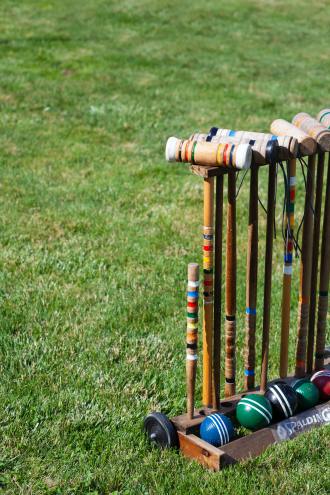
(Photo by Katie Burkhart on Unsplash)

It began, as it often does, with a newspaper article. In 2010 a collector found a photograph that he believed showed Billy the Kid playing croquet with members of his gang. If true (and the jury is still out, I think) this would have been only the second authenticated photograph of The Kid. Even if it’s not him, I was struck by the fact that this game, which I’d always thought was only played by English people on immaculate lawns, was also popular in nineteenth-century America.

It’s these kinds of unexpected juxtapositions that often spark stories for me. I knew very little about Billy, and even less about American croquet, and I’d also never written a piece of historical fiction before, but I couldn’t get the image out of my head.

So I did some research. There’s not much historical information about croquet in America but it seems it was a reasonably popular game in the 1870s, including among poorer households and Native Americans. I found an interview with an artist who painted images of that period, including one of a Native American holding a croquet mallet. One thing I did discover was that Americans call the croquet hoops ‘wickets’.

There is of course a lot of information about Billy the Kid. His story has been told so many times already, including in the Young Guns film, that I wanted to try and find a different angle. I discovered that he had a younger brother called Joe, and I became interested in that dynamic – what did Joe think of his elder brother? If Billy was ‘the Kid’, what did that make his kid brother?

The story was beginning to come together, but it wasn’t until I found out that Billy had been employed by an English ranch owner that the final piece of the puzzle was in place. It was the murder of this Englishman by a rival gang that precipitated the sequence of bloody events that made Billy infamous (and led to his own death), so what if I set my story before all that kicked off, in the lull before that storm? And how would this upper-middle-class Englishman react to the notion of croquet being played by poor farmers in New Mexico, without a manicured lawn in sight?

It’s Joe’s story, really. It’s about the real kid and his mixed feelings regarding his elder brother, who has already killed a man. What does Joe want to do with his life? Does he want to stay and milk cows on a farm, or go off and lead a potentially much more exhilarating, but risky existence with his brother? This dilemma became the heart of the story.

You can read ‘The Kid’ here.


The Kid

cowboy-283449_1920

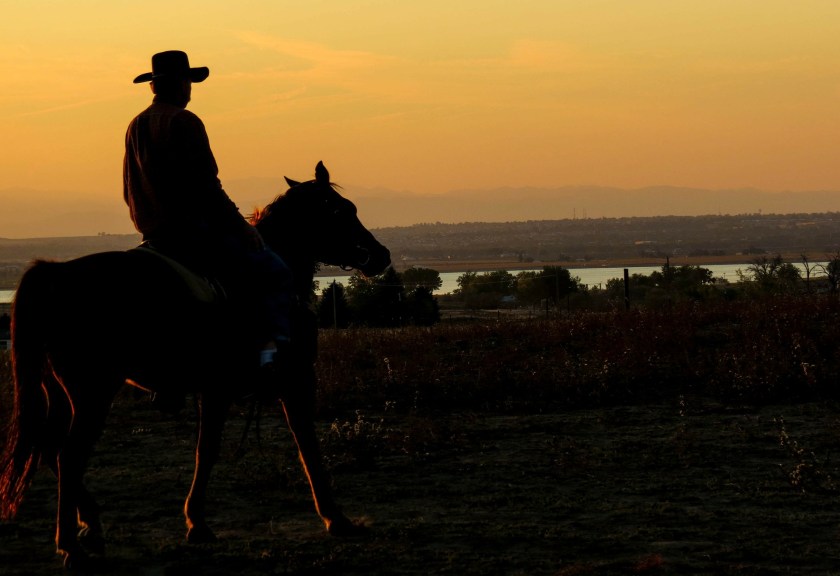
(Image by Donna H from Pixabay)

Back in 2017 when I plucked up the courage to start writing and submitting short stories again after a 14-year hiatus, Storgy were the first literary magazine to take something by me (‘Mr DIY’). So I’m really pleased to have a new story published by them – and after a lifetime of writing contemporary stories, it’s my first piece of historical fiction. ‘The Kid’ is set in New Mexico, 1877, and you can read it here.

Reading ‘Stub’

Over on Twitter, the writing community has created a great new initiative to get writers reading out their work while we’re all stuck at home, under the hashtag #FlashFamily. This gave me the opportunity to read my story ‘Stub’, published earlier this year in Lucent Dreaming.  So if you’d like to see me trying really hard not to stumble over my words, here it is:

A Couple of Reviews

The London Bus Theory also applies to reviews – it’s been a while since I’ve done one, but then along come two in quick succession.

For the Sunday Times, I reviewed James Mumford’s book about new political tribes, Vexed. You can find the review here.

I reviewed Philip Hensher’s new novel, A Small Revolution in Germany, for the Literary Review, and that review can be found here.

Books of the Year 2019

tobias-fischer-ljp-ewA23lc-unsplash

(photo: Tobias Fischer on Unsplash)

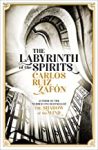
I’ve previously devoured the books in Carlos Ruiz Zafón’s Cemetery of Forgotten Books series (The Shadow of the Wind, The Angel’s Game and The Prisoner of Heaven). Set in Barcelona before, during and after the Spanish Civil War, they are gripping literary thrillers, and the latest instalment, The Labyrinth of the Spirits (Weidenfeld & Nicolson), didn’t disappoint. The books can be read in any order, and for sheer storytelling exuberance they are hard to beat.

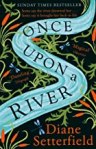
Diane Setterfield made her name with two wonderful gothic mysteries, The Thirteenth Tale and Bellman and Black. Her new novel, Once Upon a River (Doubleday), has a very different but equally evocative atmosphere. At an ancient inn near the Thames in Oxfordshire, the locals pass the time telling stories, but one night they witness something far stranger than any story they can tell: a drowned young girl is pulled out of the river and brought to the inn, only to wake a few hours later.

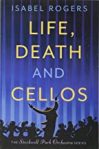
Two really enjoyable debuts: Isabel Rogers’ Life, Death and Cellos (Farrago) is a very funny tale of musical shenanigans set in the febrile atmosphere of the Stockwell Park Orchestra, while Rónán Hession’s Leonard and Hungry Paul (Bluemoose) is a charming and poignant story of two friends seeking to make sense of a confusing world.

Zoë Folbigg’s The Postcard (Aria) is the highly entertaining sequel to her bestselling novel The Note, based on the true-life story of how she met her husband. In The Postcard, Maya and James set off on a round-the-world trip, which tests their relationship to the limits. There’s a particularly grim description of a claustrophobic journey in the luggage rack of an Indian bus which has stuck with me long after reading it, and made me very glad that my backpacking days are long behind me.

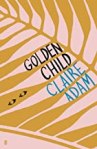
Golden Child by Claire Adam (Faber) tells the story of twin boys in Trinidad, one of whom is considered a genius, while the other is seen as a bit odd. When one of them is kidnapped, it opens up huge fissures in the family. This was one of the most disturbing and affecting novels I have read in a long time, a real gut-wrencher, and hugely deserving of this year’s Desmond Elliott Prize.

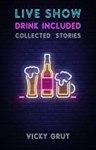
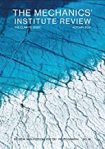
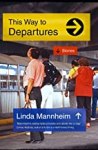
Several short story collections stood out this year. Vicky Grut’s Live Show, Drink Included (Holland Park Press) was shortlisted for the Edge Hill Prize and comprises stories published over a period of almost thirty years. One of the stories, ‘On the Way to the Church’, also featured in this year’s Best British Short Stories (Salt). Linda Mannheim’s This Way to Departures (Influx), Being Various: New Irish Short Stories edited by Lucy Caldwell (Faber), and the latest Mechanics’ Institute Review anthology featured some outstanding examples of the genre.

Szirtes

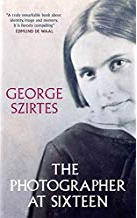
But my book the year is the only non-fiction title in this list: George Szirtes’ The Photographer at Sixteen (MacLehose), a memoir told backwards from the moment of Szirtes’ mother’s death in the 1970s. As we go back in time, we are drawn into some of the most horrific events of the twentieth century, including the Hungarian uprising against communist rule and the Holocaust. It’s a profound book about memory and family, and utterly compelling.