Reviews round-up

It occasionally happens that my reading for work pushes my reading for pleasure into the background. Recently I realised that I had inadvertently abandoned The Evenings by Gerard Reve. It had been moved some months ago from my to-be-read pile and shoved in a cupboard while other books took precedence. It was only when I saw a review of it in the Guardian the other day that I remembered I was halfway through it. Having picked it up again, I’m now trying to figure out who all the characters are and what on earth is going on in the plot.
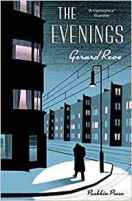
evenings

Anyway, in between times I’ve reviewed the following books:
AffluenceGuernica


AscentMother Land

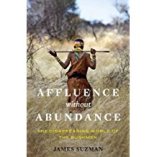
Affluence Without Abundance by James Suzman – a study of the San or Bushman tribes of Namibia, in which I learned that the San believe that white people’s hair makes them look like goats and that warthogs are ‘clever, sociable, and vengeful’. Review here

Guernica: Painting the End of the World – James Attlee’s account of Picasso’s monumental painting. Apparently, Jackson Pollock was so impressed by the painting that when he overheard a fellow artist criticising it he suggested they ‘step outside and fight it out’. Review here

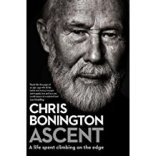
Ascent: A Life Spent Climbing on the Edge by Chris Bonington, in which the great British mountaineer recounts peaks climbed and comrades lost. Review here

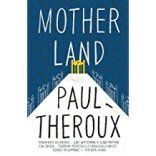
Fifty years after publishing his first novel, Paul Theroux has just published his 31st. Mother Land is a very funny book about a feuding Cape Cod family ruled by a monstrous matriarch. This review appears in the latest edition of the Literary Review here

Right, now back to The Evenings

My Father’s Wake

My Father's Wake


In this powerful memoir, Kevin Toolis contends that the Anglo-Saxon world has lost the art of mourning the dead, and that we should look to the way the Irish do it. Open caskets, touching the dead body, sitting in vigil by the coffin, playing sexually charged ‘wake games’ – all would help us come to terms with our mortality. You can read my Sunday Times review here

RISINGTIDEFALLINGSTAR

Philip Hoare

Philip Hoare writes about the sea. A lot. He won the Samuel Johnson prize for his book Leviathan, about his fascination with whales and Moby-Dick, and followed it up with The Sea Inside, which I reviewed here. His latest book ranges from memories of childhood trips to the seaside to accounts of how various cultural figures, from Shelley and Byron to Wilfred Owen and David Bowie, have loved and loathed water. It’s a really terrific book, full of great stories and a tremendous feel for the power and thrill of the sea. Here’s my Sunday Times review

Reviews round-up

OK, so I’ve been a bit slack in updating this these past few weeks, but I’ve done a number of reviews recently, as follows:


Andrew O'Hagan

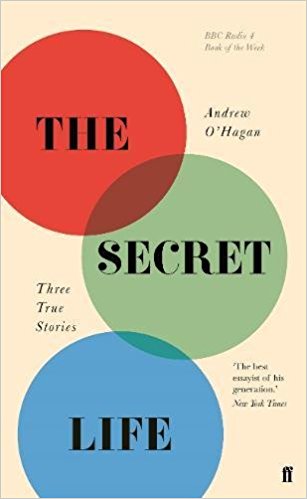
Andrew O’Hagan’s book of essays (previously published in the London Review of Books) includes a brilliant account of his abortive attempt to ghostwrite a memoir by Julian Assange. Here’s my Sunday Times review


Brenda Maddox

I’ve spent a lot of time on the Jurassic Coast in Dorset, but have never found a dinosaur skeleton, as Mary Anning did in 1811. Brenda Maddox’s book is about the Victorian geologists like Anning who changed the way we looked at the world – proving for example that it is much older than anyone thought and thus challenging Christian orthodoxy. My Sunday Times review is here


Amanda Craig


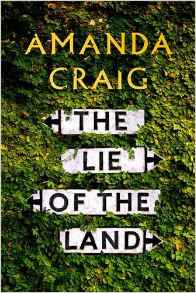
And finally, I very much enjoyed Amanda Craig’s latest novel and reviewed it here for the Literary Review.

The Seabird’s Cry

Nicolson

I’m not much of a fan of the seaside (too windy, too cold, too exposed) and one of my few interactions with seabirds was when a seagull swooped to steal my sandwich, but Adam Nicolson’s new book is a great read, full of interesting details about things such as fratricidal kittiwakes and cannibalistic gulls. You can read my Sunday Times review here

The Play Wot I Wrote Was Performed

pim-chu-245596

I mentioned in a previous post that I was going to have one of my plays, Table Manners, read out in front of an audience at the Player Playwrights group. I had no idea what to expect, but one thing I hadn’t expected was to be collared straight off by an audience member and told, ‘You do realise that Table Manners is the name of a play by Alan Ayckbourn?’

‘Er, no …’ I said.

‘It’s really famous,’ she said.

This was particularly embarrassing as I had seen quite a lot of Ayckbourn’s work, and had often thought of my play as Ayckbourn-esque. I’d envisaged it as a kind of middle-class equivalent of the kitchen-sink drama – a kitchen-table drama, if you will – with the action taking place around said piece of furniture. I’d thought the title was perfect and was dismayed to find that Ayckbourn had already nicked it.

So my play (title to be decided) was read out. It was excruciating at times to hear lines that had only existed in my head suddenly spoken out loud. The actors did a magnificent job wrestling with my often garbled syntax and ill-begotten metaphors. About halfway through Act I, I thought, Christ, this is dragging a bit. I kept my head down, for fear that I would see the audience nodding off. Things did improve somewhat. People laughed, and sometimes in the right places.

The custom at Player Playwrights is for the author to sit in front of the audience after the reading and be subjected to comments and suggestions and questions. Everybody was kind and generous, and only a few mentioned Alan Ayckbourn. Everybody then gave the play a mark out of 10 in categories such as Premise, Structure, Characters and Dialogue. My final average score came to 63.4%, which I thought was pretty good. Maybe a C grade in a particular generous exam year. I’ll take that.

Subsequently, the play has been longlisted for the Bread and Roses Theatre Playwriting Award, so clearly it must have something. It does need quite a lot of rewriting, though, especially in that draggy first act.

And, of course, it needs a new title. From now on, whenever I write a play, I will be checking it against the Ayckbourn oeuvre. He and I are clearly on the same wavelength.

Between Them

Richard Ford

Book reviewing might seem like a gentle occupation, but occasionally it can tip over into viciousness. After I wrote my review of Richard Ford’s new book, I read that he spat at Colson Whitehead because of a negative review Whitehead had written of a Ford book – in fact, Ford had waited many years to take his revenge. You can make your own minds up about whether I am likely to be on the receiving end of a Ford attack: my Sunday Times review is here


I Lived in a Travel Writer’s Shed

bradley-swenson-77389

A long time ago, I answered an ad in the London Review of Books asking for a caretaker for an isolated cottage in the Scottish Highlands. The owner was a travel writer who was about to go abroad to research a book.

As it turned out, the cottage was already taken by an artist, but I was offered the owner’s writing shed instead. Looking for an opportunity to work on my own writing, I jumped at the chance.

The place was bigger than a garden shed, though not by much. There was a desk, and a sofa that converted into a small bed. A sink afforded a trickle of water. A wood-burning stove was the only source of heat. Just outside the door, an even smaller shed housed a chemical toilet.

I could see immediately that trying to write coherent sentences was not going to be my only challenge.

As well as the practical problems, there was the isolation, too. The cottage really was in the middle of nowhere. I had no idea where the nearest neighbour was. I certainly couldn’t see another house. Most days, I saw nobody. The artist took himself off with his easel almost every morning up into the Cairngorm mountains. My only companion was a semi-wild cat who, when he wasn’t scratching me, would stalk rabbits in the garden. I’d see him sometimes with his captured prey. He’d eat every last bit of the animal, fluffy bunny tail and all.

I tried to write. I could do this, I told myself – look at all the time I had! Eight hours a day, seven days a week. This was the very definition of being a full-time writer. This was the chance I had been longing for: just me and my laptop and my novel.

One week passed, then another. A month, two months. It rained. A lot. And snowed. I struggled to get the wood-burner going. Thinking it might keep me warm, I grew a terrible beard. Every day, I stared at the blank screen. I got distracted by an insect crawling up a grass stem outside the window. I chopped logs for the stove, and strode out on long walks, kept company only by the cloud of midges above my head. Sometimes they descended and bit me. I was glad of even that much interaction with a living creature.

By the end of the third month, I was talking to the cat and believing he understood me. I talked to the rabbits, warning them about the cat, but they didn’t listen. I started to drive the forty minutes into Aviemore almost every day just to be around people.

I headed home. My book was all but non-existent. Back in London, I did, eventually, finish it. I understood then that what I needed was not complete isolation, or endless days with nothing else to do. Without social interaction, without the balance provided by other commitments, by ordinary life, my writing was dead. I needed to be with people, because human beings were what I was writing about.

Dear Friend …

Yiyun Li


Another week, another Chinese memoir. But Yiyun Li’s Dear Friend, From My Life I Write to You in Your Life is very different to the Xiaolu Guo book I reviewed a couple of weeks ago. It’s more of a collection of essays than a memoir, and although we actually learn very little about Li’s life, it’s quite a compelling book. You can read my Sunday Times review here