New story alert! In ‘Upper Kutz’, a family drama plays out in a barber’s on Christmas Eve. Really proud of this story, which took several years to come to fruition, and especially pleased to have it published in Structo, one of my favourite literary magazines. You can read it here.
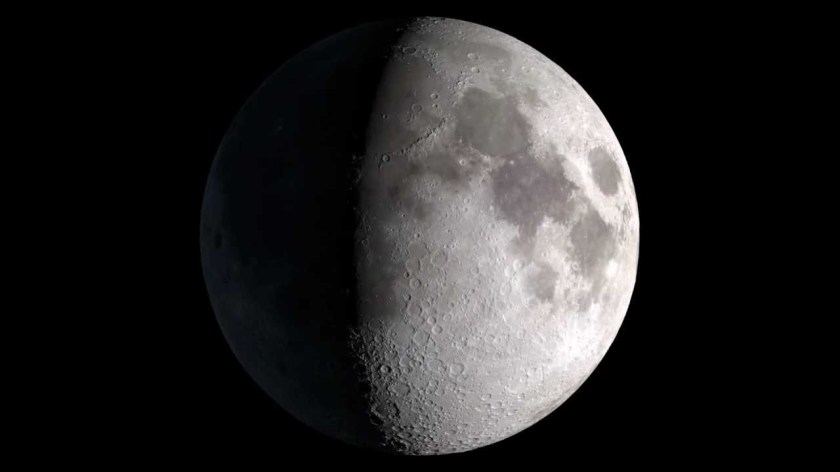
Delighted that my story ‘The Final Front Ear’, about the first writer-in-residence on the moon, has been shortlisted for the Plaza Prize. See the full shortlist here.
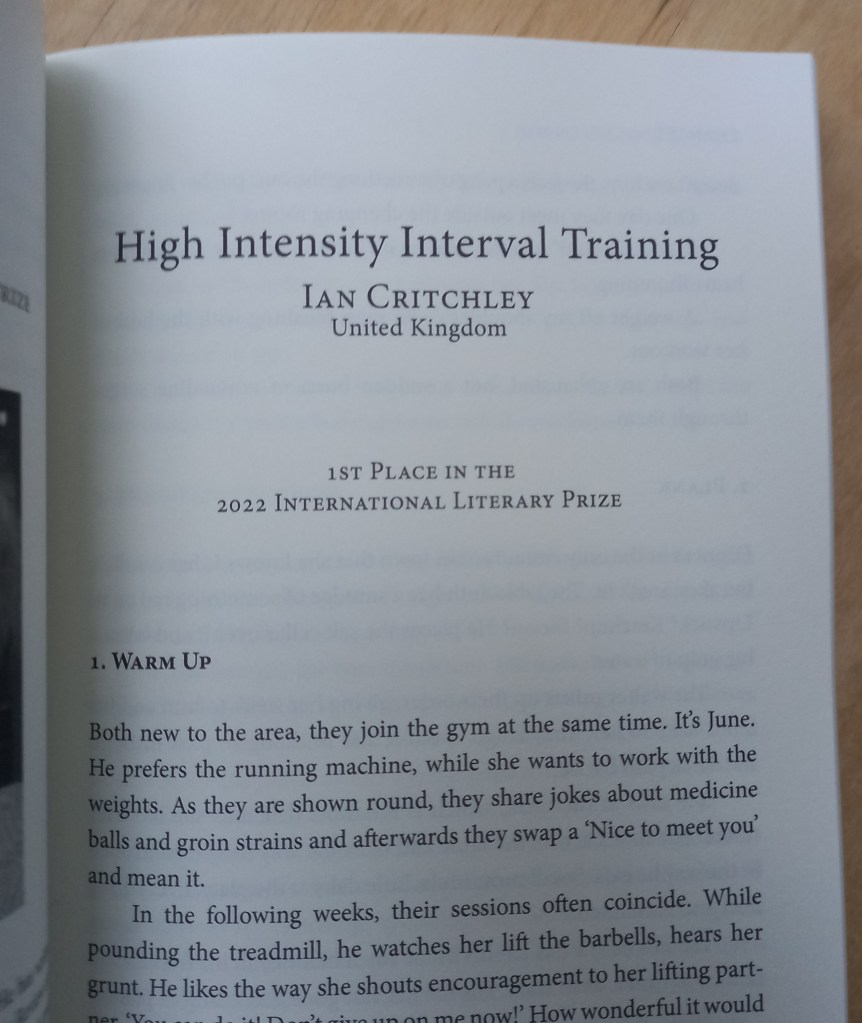
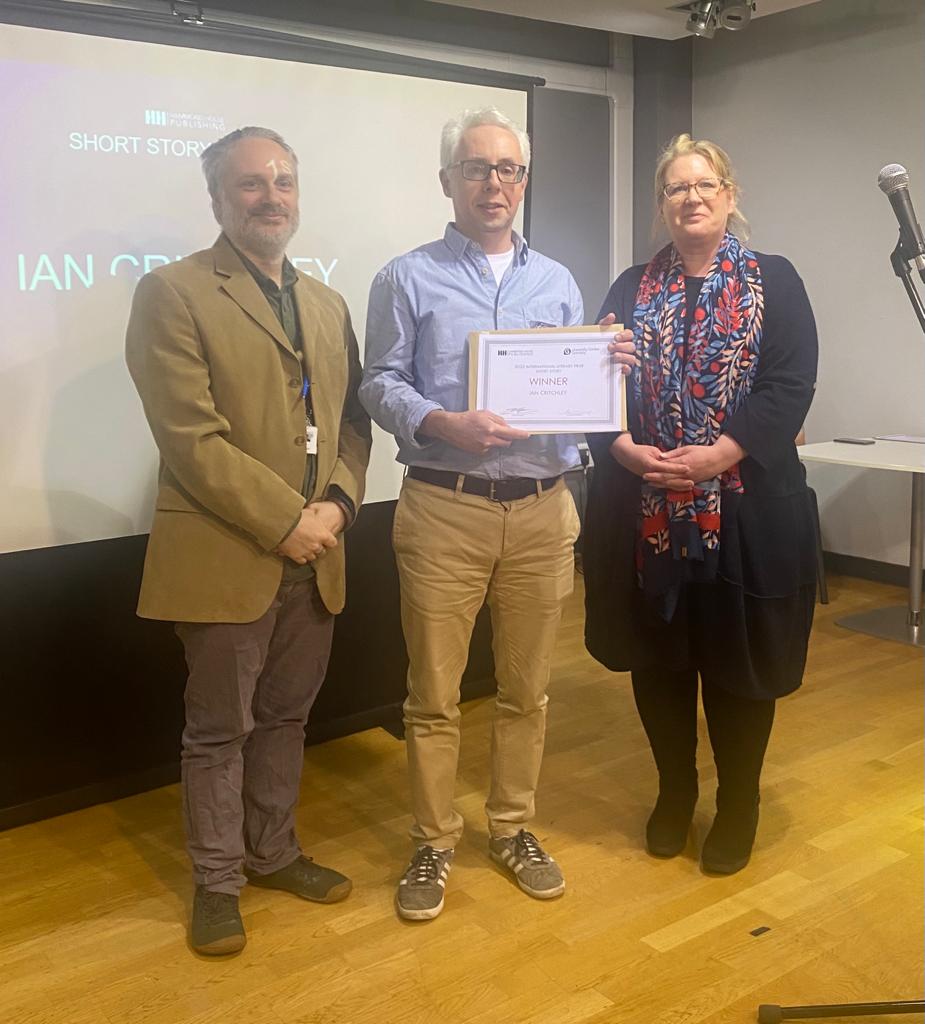
This week I had a grand day out at the Hammond House Literary Festival, where I picked up my award for winning the International Short Story Prize, plus a couple of copies of the anthology. So great to see the story in print.
Salman Rushdie’s exuberant but uneven new novel was completed before the horrific attack on him last year. I’ve reviewed it for the Literary Reviewhere
After a bit of a fallow period for short story reading last year, I maxed out this year with some wonderful collections.
Reverse Engineering is a series of books from newbie publisher Scratch Books and is based on a simple but wonderful concept: a set of classic contemporary stories alternating with interviews with their authors about their craft. Writers such as Sarah Hall and Chris Power give invaluable insights into their writing process. The second book in the series is on my Christmas list.
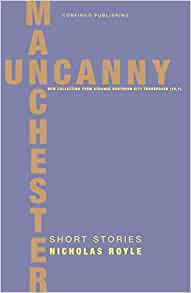
Nicholas Royle’s Manchester Uncanny (Confingo) is the second in a trilogy of collections exploring the mysterious and eerie corners of three cities (following London, and with Paris to come). Royle draws skilfully on Manchester’s geography and heritage, including a story based on Joy Division’s first album, Unknown Pleasures. A compelling collection.
I’ve long wanted to master the art of writing flash fiction but usually fail miserably. Nick Black’s collection of (mostly) flash pieces, Positive and Negative (AdHoc), is a terrific example of the genre. There was also a welcome new collection this year from Amanda Huggins – An Unfamiliar Landscape (Valley Press) features her excellent Colm Tóibín award-winning story ‘Eating Unobserved’. I also really enjoyed collections by Chloe Turner (Witches Sail in Eggshells, Reflex Press), Jamie Guiney (The Wooden Hill, époque) and Ben Pester (Am I in the Right Place?, Boiler House).
In non-fiction, there were three standout books. The Passengers by Will Ashon (Faber) is a remarkable work of contemporary oral history: Ashon interviewed dozens of people all around the UK, and their voices bear witness to what it means to be alive today. Michael Pedersen’s Boy Friends (Faber) is a lyrical and moving exploration of male friendship – a tribute to Scott Hutchison, the singer-songwriter who died in 2018.
For a number of years, the Times journalists Rachel Sylvester and Alice Thomson have jointly interviewed public figures. Their fascinating book, What I Wish I’d Known When I Was Young (William Collins) draws on these interviews to investigate how adversity in childhood can influence adult life.
Fiction-wise, I was greatly impressed by Ashley Hickson-Lovence’s Your Show (Faber), which tells the story of football referee Uriah Rennie. Set in Stone by Stela Brinzeanu (Legend) is a beautifully written tale of love against the odds, set in medieval Moldova but with contemporary resonances. Zoë Folbigg’s The Three Loves of Sebastian Cooper (Boldwood) is a page-turning story of three very different women as they gather at the funeral of the man they all loved.
I was hugely excited to learn that Louise Welsh was publishing a sequel to her brilliant novel The Cutting Room, and it didn’t disappoint. The Second Cut (Canongate) takes us back to the seedy Glasgow world of auctioneer Rilke in another superb literary thriller. Last but definitely not least, I loved Janice Hallett’s The Twyford Code (Viper), an ingenious crime novel told almost entirely through transcribed audio files.
So thrilled that my story ‘High-Intensity Interval Training’ has won the Hammond House International Literary Prize!
This story was conceived during endless PE With Joe HIIT sessions in lockdown. Very glad that something other than exercise came out of those!
The full list of winners can be seen here. All the shortlisted entries will be published in a forthcoming anthology and there will be a prize-giving ceremony at the University Centre Grimsby Literary Festival in February 2023.
First, I want to highlight the fantastic work done by independent publishers. Over the past few years, and facing increasingly difficult challenges, they have consistently produced some of the best and most interesting fiction around.
Ashley Stokes’ Gigantic (Unsung Stories) tells the tale of Kevin Stubbs and the Gigantopithecus Intelligence Team (GIT) as they attempt to prove or disprove the existence of a Bigfoot in Sutton. Kevin is a very funny narrator, and in its mix of true believers and sceptics it’s like an episode of X-Files transported to Surrey (and I mean peak X-Files, not the awful later episodes). The Dig Street Festival by Chris Walsh (Louise Walters Books) follows the comic misfortunes of a trio of misfits in the fictional London Borough of Leytonstow as they battle their boss, landlord, and social hardship to organise an ‘urban love revolution’.
A couple of years ago Bluemoose published Leonard and Hungry Paul by Rónán Hession, which deservedly became a word-of-mouth success. Hession’s follow-up, Panenka, is a similarly engaging story about a man whose life was changed irrevocably when he missed a penalty for his team by attempting a ‘panenka’, a delicate chipped shot that leaves the kicker embarrassingly exposed if executed badly (some successful examples can be seen here: https://www.youtube.com/watch?v=i4c7Ypx89Rs). Even if you aren’t into football at all, there’s much to enjoy here: like Leonard and Hungry Paul, it’s a poignant story of love and loss.
Cold New Climate by Isobel Wohl was the first publication from a brand new publisher, Weatherglass Books. On the surface it’s a story of New York relationships, but there is a disturbing undercurrent running through it that eventually breaks out into one of the most disturbing endings I’ve read in a long time. The online literary magazine Storgy have recently branched out into publishing books, and I very much enjoyed Parade by Michael Graves, a Florida-set novel of faith, sex and drugs.
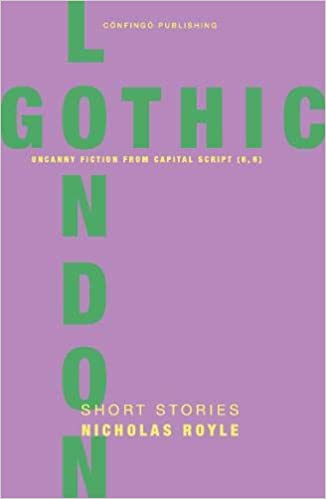
I read fewer short stories than I meant to this year, but my two favourite collections were Nicholas Royle’s London Gothic (Confingo) and Percival Everett’s Damned If I Do (Influx). Royle’s is the first of a planned series exploring the mysterious corners of different cities, with Manchester and Paris to come. The opening story of Everett’s collection, ‘The Fix’, is especially brilliant. A stranger is taken in by the owner of a sandwich shop and proceeds to fix broken items brought to him by people in the neighbourhood. His abilities soon exceed the merely practical, however, and come to seem increasingly miraculous, with tragic consequences.
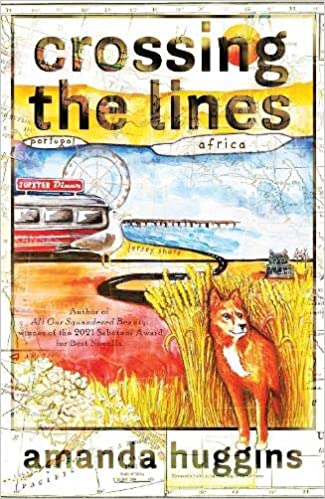
I also loved the debut collection by Rhiannon Lewis, I Am The Mask Maker, published by the indie Victorina Press. They also published the wonderful new novella by Amanda Huggins, Crossing the Lines, based on her Costa-shortlisted story ‘Red’.
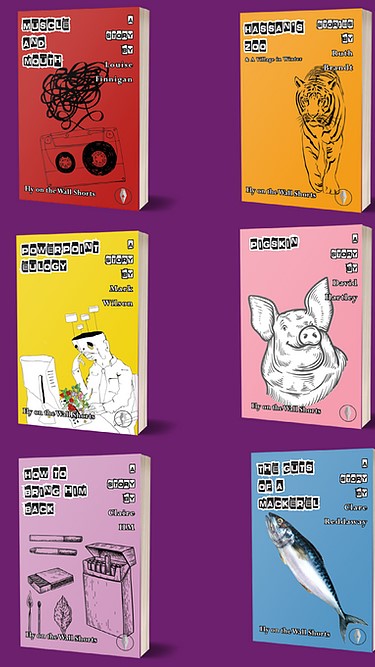
Fly on the Wall Press is a not-for-profit publisher based in Manchester, producing short stories and poetry that engage with political and social issues. This year they published a season of Fly on the Wall Shorts – six outstanding stories featuring pigs, tigers and Powerpoints among many other rich things. These are great examples of something that’s unfortunately all too rare: short stories published in single pamphlets. Nightjar Press (https://nightjarpress.weebly.com) also do sterling work in this area with their ongoing series of uncanny tales, while new kid on the block Seventy2One (https://massiveoverheads.com/seventy2one-books/) are planning to publish chapbooks amongst other things, but I’d love to see more.
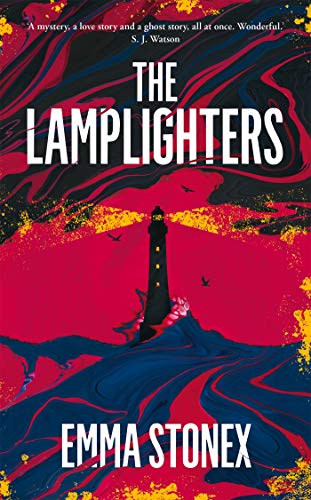
I also read some great books from the big publishers. The first two novels I bought when the bookshops reopened post-lockdown were both exceptional. Emma Stonex’s The Lamplighters (Picador) is based on a true story: in 1900 the three keepers of a lighthouse on the Flannan Isles in the Outer Hebrides disappeared without trace. Stonex transports the story to 1970s Cornwall and weaves a haunting mystery around the three men, and the women they have left behind. Luckenbooth by Jenni Fagan (Heinemann) is set at different periods during the twentieth century in an Edinburgh tenement building, whose inhabitants include a Beat poet, a psychic and the devil’s daughter. A fantastically strange novel that had me hooked.
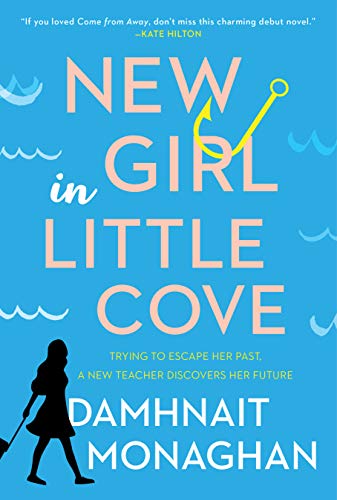
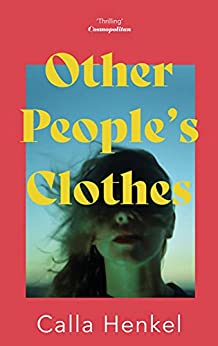
Like most people, I didn’t travel far on my holidays, but I took two books with me that transported me to Newfoundland and Berlin. New Girl in Little Cove by Damhnait Monaghan (HarperCollins) charts the trials and tribulations of a teacher who moves from Toronto to a Catholic school in Newfoundland and struggles to integrate into the local community. But what is she running away from? Calla Henkel’s Other People’s Clothes (Sceptre) also has fish-out-water characters, with two American art students renting a magnificent apartment in Berlin from a crime writer, who may or may not have sinister plans for them.
Zoë Folbigg’s fourth novel The Night We Met (Aria) is her best yet – a tragic romance filled with warmth and humour. Last but definitely not least is Iron Annie (Bloomsbury), the debut novel by Luke Cassidy, a riotous story of love and drug running in Ireland and England.
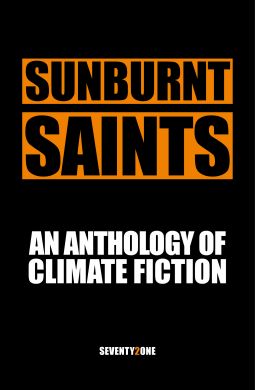
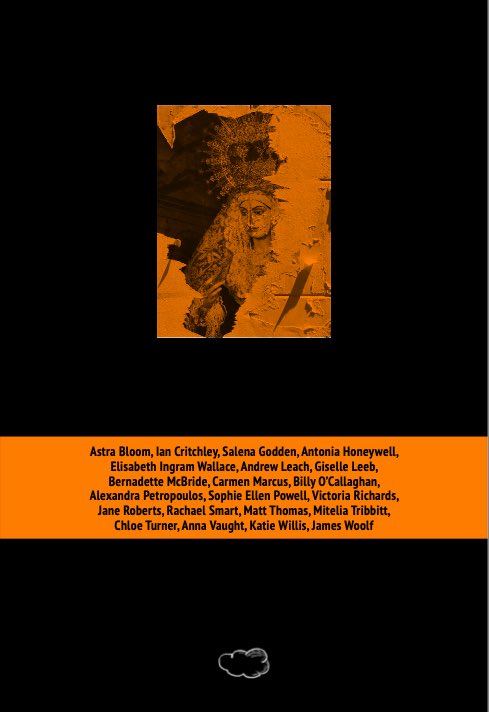
Sunburnt Saints is published today! It’s a fantastic achievement by editors Andrew Leach and Hannah Persaud to get this anthology from conception to publication in just a few months.
My contribution, ‘Outage’, is a story of love and darkness, and I’m very proud and honoured to be among so many talented writers.













 Ian Critchley