I’ve loved the Uffington White Horse on the Oxfordshire/Berkshire border since I first visited as teenager. One of the many figures carved out of the chalk hillsides across southern England, it’s the only one that has been dated to prehistoric times. Nobody knows for certain who made it or what it represents, though some say it’s a depiction of Epona, the Celtic goddess of fertility.
Over the years I’ve tried to write about this place many times, but nothing quite gelled. Then I read that in previous centuries there was an annual ‘scouring’ of the horse – a clean-up operation to keep the figure free of weeds. This scouring would be accompanied by much debauchery. The work is still done annually by volunteers for the National Trust, with new chalk hammered into the ground to freshen up the whiteness, but without the debauchery.
It was this notion of ‘scouring’ that really caught my imagination. Could this be applied to a character, perhaps in the sense of metaphorically sloughing off skin to reveal a new identity underneath?
So, the story would be called ‘The Scouring’ and have that element in it, plus lots more – betrayal, affairs, strange apparitions, debauchery . . . I did draft after draft over a couple of years and by the time I’d finished, I thought it was the best thing I’d ever written.
But then several beta readers showed me that what I’d done was really not working at all.
Hard to take, of course, but once I’d licked my wounds I realised they were right. A line I once wrote in one of my many unpublished novels came back to me: ‘There are only three things wrong with this piece of writing: the beginning, the middle and the end.’
I went back to the drawing board, changed the title and the characters, and the whole premise. And the beginning, the middle and the end. The only thing that remained was the figure of the white horse itself.
More drafts, and finally there was ‘Uffington’, which to my astonishment has won the HISSAC Short Story Competition. You can read it here: http://www.hissac.co.uk/uploads/Shorts2021.pdf
I’ve greatly enjoyed Rose Tremain’s novels and her latest was no exception. Here’s my review of Lily in this month’s Literary Review: https://literaryreview.co.uk/capital-murder
It’s been a pretty lean year writing-wise. My decision to enter as many writing competitions as possible has backfired spectacularly, with a tsunami of failures that have penetrated even my rejection-thickened hide.
But two small and very welcome glimmers have come in the form of longlistings in the Cambridge Short Story Prize and the HISSAC Short Story Prize – both for the same story, ‘Uffington’. It’s a story that has been through quite a drawn-out and painful genesis, so I’m delighted it’s received some recognition.
I didn’t progress any further in the first of these competitions, but the second is still in train, so fingers crossed.
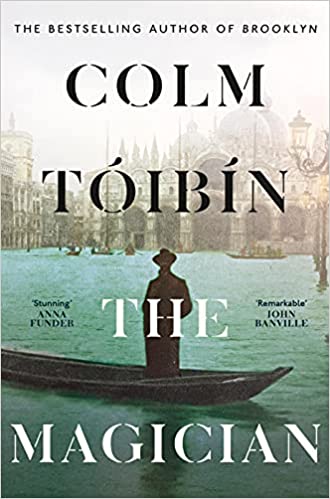
This month I have mainly been reviewing Colm Tóibín’s new novel The Magician, which follows the life and times of Thomas Mann. You can read the review in the Literary Review‘s 500th issue: https://literaryreview.co.uk/thomas-his-brothers
I’ve tried surfing a couple of times. In my 20s I did a course at Croyde surf school and won a ‘Wave of the Day’ medal for catching a wave all the way to the beach (still my greatest achievement). I thought I was pretty good at it, only to be disabused a couple of years ago in St Ives when I couldn’t even get up from horizontal.
Paul Theroux’s new novel, Under the Wave at Waimea, follows the (mis)fortunes of a much better surfer: Joe Sharkey, aka The Shark, as he struggles to come to terms with getting older and the fear that he may never surf again. It includes a guest appearance by the great gonzo journalist Hunter S. Thompson. You can read my review in the Literary Review: https://literaryreview.co.uk/surfing-with-sharks
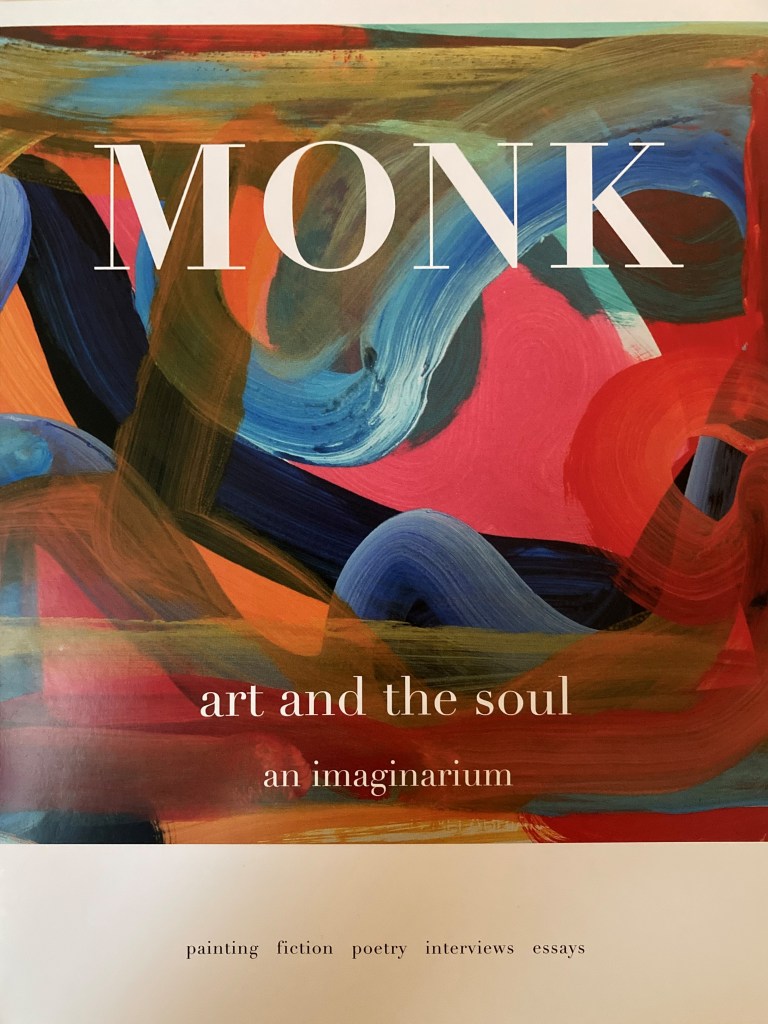
My first book post of 2021 was this stunning new journal MONK. It’s been online for a while now (three issues available at monk.gallery) but this is the first print issue.
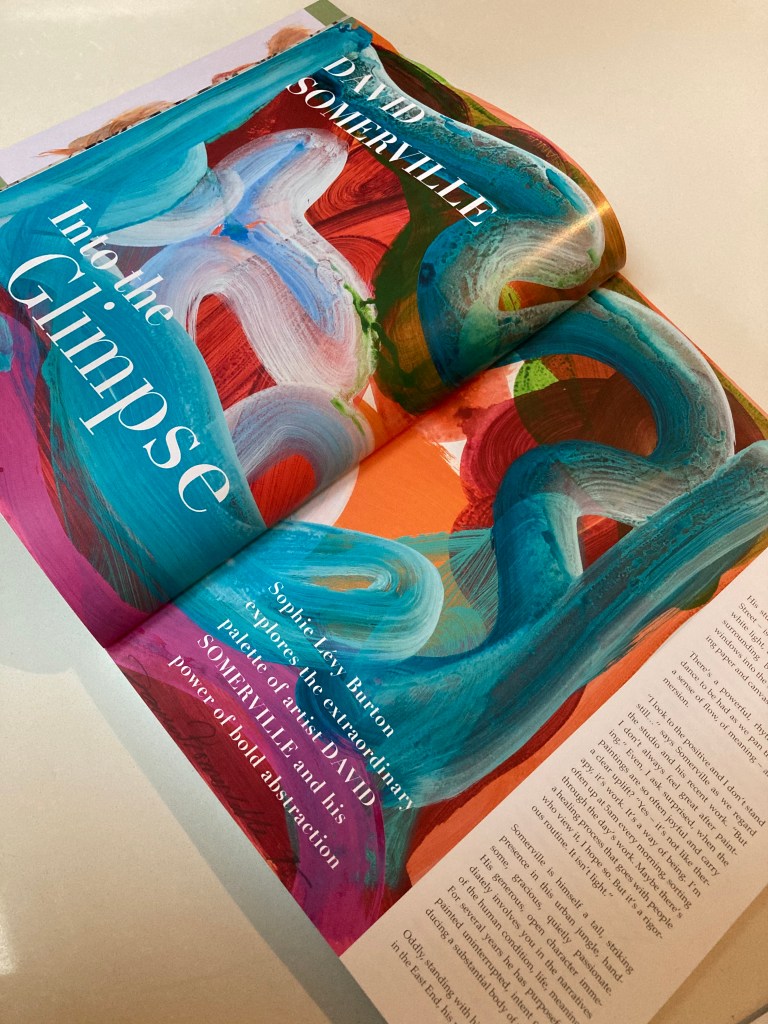
And what a delight it is. Beautifully designed, it features fiction and poetry, alongside interviews with artists such as David Somerville (who has provided the cover image), Bloodaxe Books publisher Neil Astley, and Rowan Williams, the former Archbishop of Canterbury.
Editor Sophie Lévy Burton writes in her Introduction that ‘MONK dances around the theology of creativity, of why we artists do what we do’. As a whole, the journal is a fascinating mix of art and spirituality, an ‘imaginarium’.
‘MONK dances around the theology of creativity, of why we artists do what we do’.
Sophie Lévy Burton, Editor
Restrictions permitting, MONK is available to buy in selected bookshops, but can also be ordered online. For further details, see http://monk.gallery/monk-anthology/
I love a gothic mystery, and The Quickening by Rhiannon Ward (Trapeze) had me gripped. Set in the 1920s, the narrator, a heavily pregnant photographer, is sent to a decaying old pile in Sussex to photograph the contents for auction. But the house was once the scene of a dramatic séance, which is about to be recreated.
My first job in publishing, way back in the mists of time, was on Macmillan’s thirty-volume Dictionary of Art, so I was naturally drawn to Eley Williams’ terrific debut novel The Liar’s Dictionary (Heinemann). It’s ostensibly about the search for fake entries (‘mountweazels’) in an unfinished encyclopedia, but is also a witty love story and a celebration of the power of language.
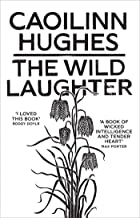
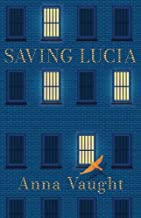
Caoilinn Hughes’ The Wild Laughter (Oneworld) is a tragi-comic story of two brothers trying to deal with their aged father’s dying wishes in post-boom Ireland, while Anna Vaught’s excellent debut novel, Saving Lucia (Bluemoose), tells the story of the unlikely friendship between the Hon Violet Gibson, who attempted to assassinate Mussolini in 1926, and Lucia Joyce, daughter of James, after they were both deemed mentally unstable and sent to the same institution.
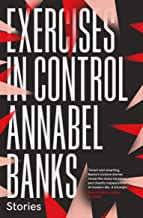
I had never read any of David Constantine’s work before, but his latest collection of short stories, The Dressing-Up Box (Comma Press) left me wondering what had taken me so long. Weird in a very good way, the opening story, in which a group of children barricade themselves in an abandoned house, has haunted me ever since I read it. Annabel Banks’ debut story collection, Exercises in Control (Influx) also stood out.
Despite barely having left the house since March, I was asked by the Sunday Times to do their round-up of the year’s best travel books. There were several gems, but two really stood out. The Lost Pianos of Siberia by Sophy Roberts (Doubleday) is partly a treasure hunt – Roberts was asked by a Mongolian friend to find a piano for her in Siberia – but it’s also a tremendous account of that region’s history and culture, taking in Rasputin, the gulags and the last tsar, among many other wonderful things.
For several years Gareth Rees has run a website called Unofficial Britain (www.unofficialbritain.com), which collects strange stories about places that tend to get overlooked: car parks and flyovers, motorway service stations and tower blocks, industrial estates and power stations. His book, Unofficial Britain: Journeys Through Unexpected Places (Elliot and Thompson), sees him travelling the country in search of more such tales, including the exploits of the Grimsby Ghostbusters, called to deal with a slew of supernatural happenings in the coastal town. These are examples of the new British folklore, he argues, every bit as valuable as the myths and mysteries that swirl around our older buildings and landscapes.
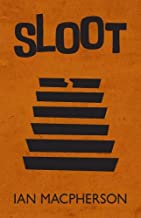
I read some great books this year that were actually published in 2019 and so should technically not appear here, but what the hell – blame it on the pandemic. The Complex by Michael Walters (Salt) is a superbly unsettling, dream-like novel about two families coming together and falling apart in an isolated house, while Ian MacPherson’s Sloot (Bluemoose) is a very funny Celtic screwball noir about a failed stand-up comedian who returns to Dublin for a funeral and gets caught up in a crime caper.
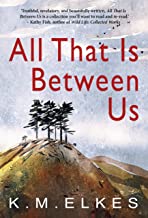
I’m a recent convert to flash fiction, both in my writing and reading, and two collections showcased some of the best examples of the genre: Some Days Are Better Than Ours by Barbara Byar (Reflex) and Ken Elkes’ All That Is Between Us (AdHoc).
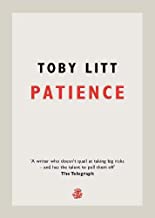
I loved Toby Litt’s Patience (Galley Beggar). Set in an orphanage, it’s narrated by wheelchair-bound Elliott as he observes the daily dramas of his fellow orphans and their carers. Elliott is one of the funniest and most engaging narrators I’ve come across in a long time, and if you want to discover the rules of a game called Sockball, this is the novel for you.
My overall book of the year is Susanna Clarke’s brilliant Piranesi. I loved Jonathan Strange and Mr Norrell and my hopes for her new one were very high. I wasn’t disappointed. Piranesi lives in a house of seemingly endless rooms, filled with huge statues, and with a lower floor inundated by the sea. Every week he meets up with a man known only as the Other. Where is this place? Why are they there? Mysterious and fantastical, it’s a stunning novel.
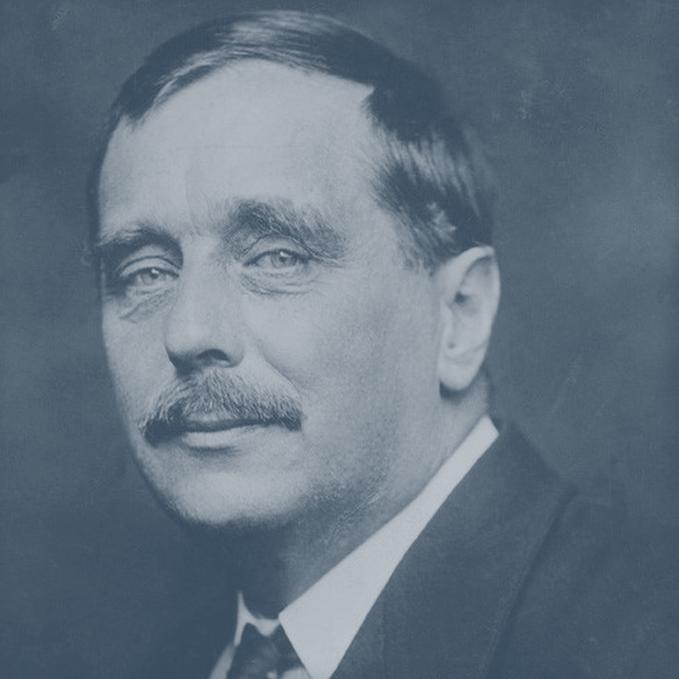
My story ‘Hillman’s Imp’ has been shortlisted for the 2020 H.G. Wells Short Story Competition. £500 up for grabs for the winner, but all the shortlisted stories will be published in an anthology. Results announced 22 November! More details here.
It began, as it often does, with a newspaper article. In 2010 a collector found a photograph that he believed showed Billy the Kid playing croquet with members of his gang. If true (and the jury is still out, I think) this would have been only the second authenticated photograph of The Kid. Even if it’s not him, I was struck by the fact that this game, which I’d always thought was only played by English people on immaculate lawns, was also popular in nineteenth-century America.
It’s these kinds of unexpected juxtapositions that often spark stories for me. I knew very little about Billy, and even less about American croquet, and I’d also never written a piece of historical fiction before, but I couldn’t get the image out of my head.
So I did some research. There’s not much historical information about croquet in America but it seems it was a reasonably popular game in the 1870s, including among poorer households and Native Americans. I found an interview with an artist who painted images of that period, including one of a Native American holding a croquet mallet. One thing I did discover was that Americans call the croquet hoops ‘wickets’.
There is of course a lot of information about Billy the Kid. His story has been told so many times already, including in the Young Guns film, that I wanted to try and find a different angle. I discovered that he had a younger brother called Joe, and I became interested in that dynamic – what did Joe think of his elder brother? If Billy was ‘the Kid’, what did that make his kid brother?
The story was beginning to come together, but it wasn’t until I found out that Billy had been employed by an English ranch owner that the final piece of the puzzle was in place. It was the murder of this Englishman by a rival gang that precipitated the sequence of bloody events that made Billy infamous (and led to his own death), so what if I set my story before all that kicked off, in the lull before that storm? And how would this upper-middle-class Englishman react to the notion of croquet being played by poor farmers in New Mexico, without a manicured lawn in sight?
It’s Joe’s story, really. It’s about the real kid and his mixed feelings regarding his elder brother, who has already killed a man. What does Joe want to do with his life? Does he want to stay and milk cows on a farm, or go off and lead a potentially much more exhilarating, but risky existence with his brother? This dilemma became the heart of the story.













 Ian Critchley