The Kid

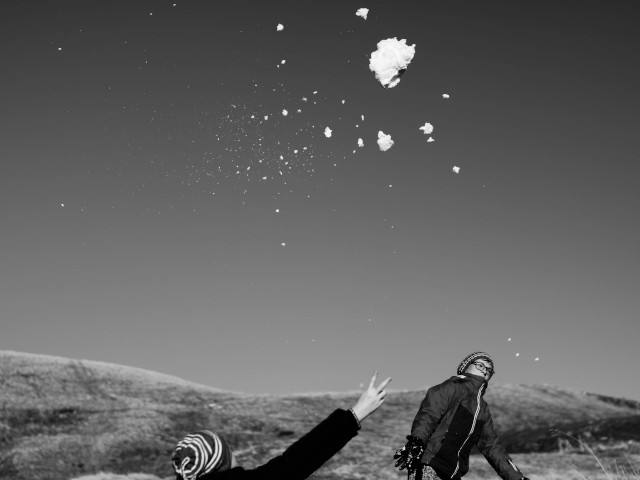
cowboy-283449_1920

(Image by Donna H from Pixabay)

Back in 2017 when I plucked up the courage to start writing and submitting short stories again after a 14-year hiatus, Storgy were the first literary magazine to take something by me (‘Mr DIY’). So I’m really pleased to have a new story published by them – and after a lifetime of writing contemporary stories, it’s my first piece of historical fiction. ‘The Kid’ is set in New Mexico, 1877, and you can read it here.

A Couple of Reviews

The London Bus Theory also applies to reviews – it’s been a while since I’ve done one, but then along come two in quick succession.

For the Sunday Times, I reviewed James Mumford’s book about new political tribes, Vexed. You can find the review here.

I reviewed Philip Hensher’s new novel, A Small Revolution in Germany, for the Literary Review, and that review can be found here.

Books of the Year 2019

tobias-fischer-ljp-ewA23lc-unsplash

(photo: Tobias Fischer on Unsplash)

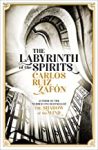
I’ve previously devoured the books in Carlos Ruiz Zafón’s Cemetery of Forgotten Books series (The Shadow of the Wind, The Angel’s Game and The Prisoner of Heaven). Set in Barcelona before, during and after the Spanish Civil War, they are gripping literary thrillers, and the latest instalment, The Labyrinth of the Spirits (Weidenfeld & Nicolson), didn’t disappoint. The books can be read in any order, and for sheer storytelling exuberance they are hard to beat.

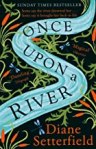
Diane Setterfield made her name with two wonderful gothic mysteries, The Thirteenth Tale and Bellman and Black. Her new novel, Once Upon a River (Doubleday), has a very different but equally evocative atmosphere. At an ancient inn near the Thames in Oxfordshire, the locals pass the time telling stories, but one night they witness something far stranger than any story they can tell: a drowned young girl is pulled out of the river and brought to the inn, only to wake a few hours later.

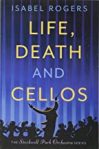
Two really enjoyable debuts: Isabel Rogers’ Life, Death and Cellos (Farrago) is a very funny tale of musical shenanigans set in the febrile atmosphere of the Stockwell Park Orchestra, while Rónán Hession’s Leonard and Hungry Paul (Bluemoose) is a charming and poignant story of two friends seeking to make sense of a confusing world.

Zoë Folbigg’s The Postcard (Aria) is the highly entertaining sequel to her bestselling novel The Note, based on the true-life story of how she met her husband. In The Postcard, Maya and James set off on a round-the-world trip, which tests their relationship to the limits. There’s a particularly grim description of a claustrophobic journey in the luggage rack of an Indian bus which has stuck with me long after reading it, and made me very glad that my backpacking days are long behind me.

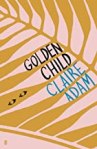
Golden Child by Claire Adam (Faber) tells the story of twin boys in Trinidad, one of whom is considered a genius, while the other is seen as a bit odd. When one of them is kidnapped, it opens up huge fissures in the family. This was one of the most disturbing and affecting novels I have read in a long time, a real gut-wrencher, and hugely deserving of this year’s Desmond Elliott Prize.

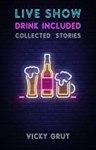
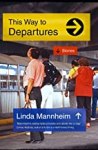
Several short story collections stood out this year. Vicky Grut’s Live Show, Drink Included (Holland Park Press) was shortlisted for the Edge Hill Prize and comprises stories published over a period of almost thirty years. One of the stories, ‘On the Way to the Church’, also featured in this year’s Best British Short Stories (Salt). Linda Mannheim’s This Way to Departures (Influx), Being Various: New Irish Short Stories edited by Lucy Caldwell (Faber), and the latest Mechanics’ Institute Review anthology featured some outstanding examples of the genre.
Szirtes

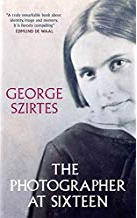
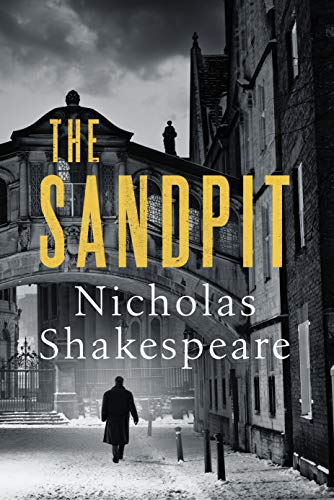
But my book the year is the only non-fiction title in this list: George Szirtes’ The Photographer at Sixteen (MacLehose), a memoir told backwards from the moment of Szirtes’ mother’s death in the 1970s. As we go back in time, we are drawn into some of the most horrific events of the twentieth century, including the Hungarian uprising against communist rule and the Holocaust. It’s a profound book about memory and family, and utterly compelling.
I had flashes …

I’m a relative newcomer to flash fiction – in fact, before I joined Twitter in 2016 I don’t think I had ever even heard of it, and I was certainly unprepared for how huge it is as a genre among writers. Over the past couple of years I’ve been trying to work on a few of these very short stories (fewer than 1000 words) and this week two have been accepted for publication – one by Lucent Dreaming and the other by Ellipsis Zine. These should be out in the next few weeks, so I’ll post links when the time comes.

Books of the Year

cesar-viteri-426877-unsplash

(Photo by César Viteri on Unsplash)

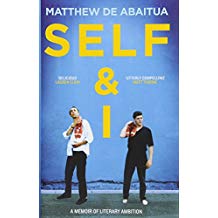
First up is the only work of non-fiction that really got me excited this year: Matthew De Abaitua’s Self and I, an account of the time the author spent working as an amanuensis to Will Self back in 1994. The title is, of course, a nod to Withnail and I, and Self’s capriciousness is certainly Withnail-esque. Self often gets a bad press, and De Abaitua doesn’t downplay his idiosyncracies, but he comes across as a highly sympathetic character. Really, though, it’s an account of how De Abaitua tried to get his own literary ambitions going, and any would-be writer will empathise with the long, frustrating and often humiliating experience that entails.

Self and IBest British Short Stories

Now on to the fiction. I’m a great admirer of what Salt Publishing do – they have a wonderfully eclectic and risk-taking list to which I return to again and again. The annual Best British Short Stories, edited by Nicholas Royle, is always great value, and the 2018 edition opened with one of the best stories I’ve read in some considerable time: ‘Paymon’s Trio’ by Colette de Curzon, a tale about a demonic music score. The story of how it came to be published is equally compelling: it was written in 1949 when the author was 22, but because she didn’t know anything about the publishing world and how to get published, she put away in a folder until her daughter found it 67 years later. She lived long enough to see it published as a chapbook by Nightjar Press before passing away in March this year.

The ChameleonThe Hoarder

Salt get a very big tick from me for publishing the always excellent Alice Thompson – she didn’t have a book out this year, but I read and loved her 2010 novel The Existential Detective. Salt did give us Samuel Fisher’s novel The Chameleon in 2018. Narrated by a book that can change its cover to blend in to any given situation, the story is both a poignant account of a man on his deathbed and a gripping spy thriller set in Cold War-era Russia.

I was surprised by Jess Kidd’s The Hoarder – not having read any of its reviews or any of her previous work, I picked it up thinking it would be a work of high gothic mystery (a genre I absolutely love). To a certain extent it is – there’s a big sprawling house full of secrets – but it’s got a fantastic blend of dark and knockabout humour that I wasn’t at all expecting. The narrator is often accompanied by apparitions of saints, who comment on her every move – St George is there clad in his armour, while St Valentine observes her attempts at getting a relationship going.

Perfidious AlbionOur Child of the Stars

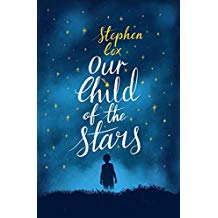
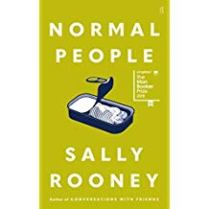
In my day job as a freelance copy editor and proofreader I’ve worked on some fantastic novels this year. Sam Byers’ Perfidious Albion is a fabulous post-Brexit satire that had me laughing out loud at my desk (great cover too), while Stephen Cox’s Our Child of the Stars is a moving work of sci-fi/fantasy that imagines an orphan alien adopted by an American couple. Sally Rooney’s Normal People has rightly garnered much praise – an intricate and intimate portrayal of a young man and woman and their on-off relationship as they navigate the awkward years of school and university.

RooneyCountry


Finally on to two novels set in Northern Ireland. Michael Hughes’s terrific Country re-imagines the Troubles as an Homeric epic, with an IRA sniper cast in the role of Achilles and his enemy, a British soldier named Henry, as Hector. I’ve banged on a fair bit both on this blog and on Twitter about the Booker winner, Anna Burns’s Milkman, so I won’t repeat myself here, except to say that I think it is one of the best novels I have read in years.

Milkman