Books of the Year 2022

ed-robertson-eeSdJfLfx1A-unsplash

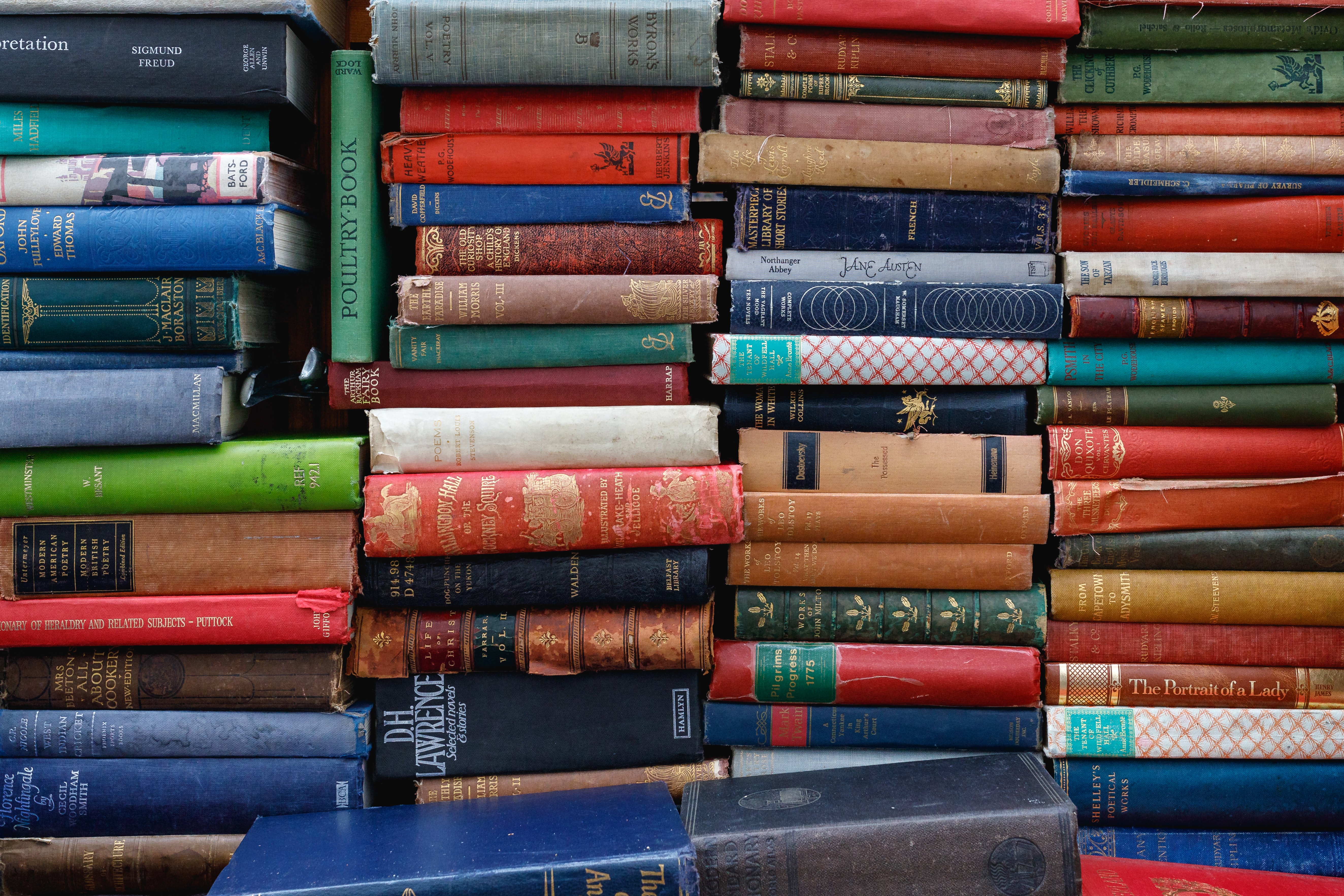
(Photo by Ed Robertson on Unsplash)

After a bit of a fallow period for short story reading last year, I maxed out this year with some wonderful collections.

Reverse Engineering is a series of books from newbie publisher Scratch Books and is based on a simple but wonderful concept: a set of classic contemporary stories alternating with interviews with their authors about their craft. Writers such as Sarah Hall and Chris Power give invaluable insights into their writing process. The second book in the series is on my Christmas list.

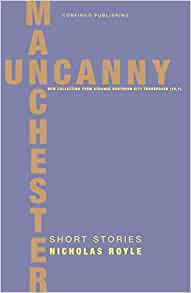
Nicholas Royle’s Manchester Uncanny (Confingo) is the second in a trilogy of collections exploring the mysterious and eerie corners of three cities (following London, and with Paris to come). Royle draws skilfully on Manchester’s geography and heritage, including a story based on Joy Division’s first album, Unknown Pleasures. A compelling collection.

I’ve long wanted to master the art of writing flash fiction but usually fail miserably. Nick Black’s collection of (mostly) flash pieces, Positive and Negative (AdHoc), is a terrific example of the genre. There was also a welcome new collection this year from Amanda Huggins – An Unfamiliar Landscape (Valley Press) features her excellent Colm Tóibín award-winning story ‘Eating Unobserved’. I also really enjoyed collections by Chloe Turner (Witches Sail in Eggshells, Reflex Press), Jamie Guiney (The Wooden Hill, époque) and Ben Pester (Am I in the Right Place?, Boiler House).   

In non-fiction, there were three standout books. The Passengers by Will Ashon (Faber) is a remarkable work of contemporary oral history: Ashon interviewed dozens of people all around the UK, and their voices bear witness to what it means to be alive today. Michael Pedersen’s Boy Friends (Faber) is a lyrical and moving exploration of male friendship – a tribute to Scott Hutchison, the singer-songwriter who died in 2018.

For a number of years, the Times journalists Rachel Sylvester and Alice Thomson have jointly interviewed public figures. Their fascinating book, What I Wish I’d Known When I Was Young (William Collins) draws on these interviews to investigate how adversity in childhood can influence adult life.

Fiction-wise, I was greatly impressed by Ashley Hickson-Lovence’s Your Show (Faber), which tells the story of football referee Uriah Rennie. Set in Stone by Stela Brinzeanu (Legend) is a beautifully written tale of love against the odds, set in medieval Moldova but with contemporary resonances. Zoë Folbigg’s The Three Loves of Sebastian Cooper (Boldwood) is a page-turning story of three very different women as they gather at the funeral of the man they all loved.

I was hugely excited to learn that Louise Welsh was publishing a sequel to her brilliant novel The Cutting Room, and it didn’t disappoint. The Second Cut (Canongate) takes us back to the seedy Glasgow world of auctioneer Rilke in another superb literary thriller. Last but definitely not least, I loved Janice Hallett’s The Twyford Code (Viper), an ingenious crime novel told almost entirely through transcribed audio files.
New year, new journal

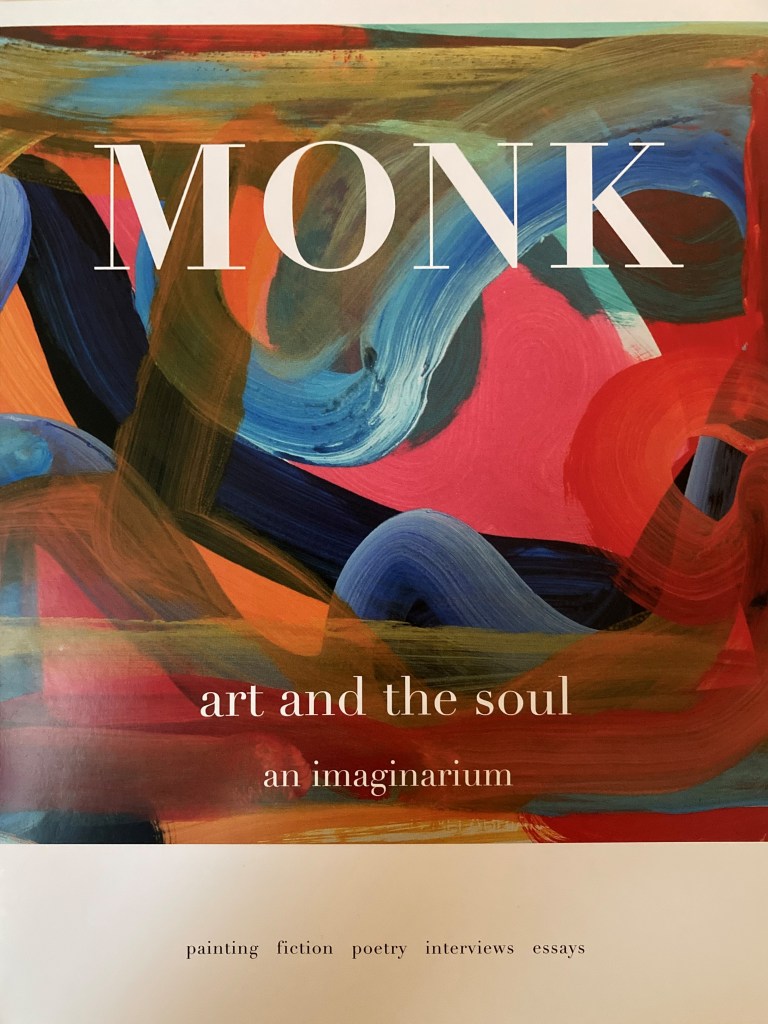
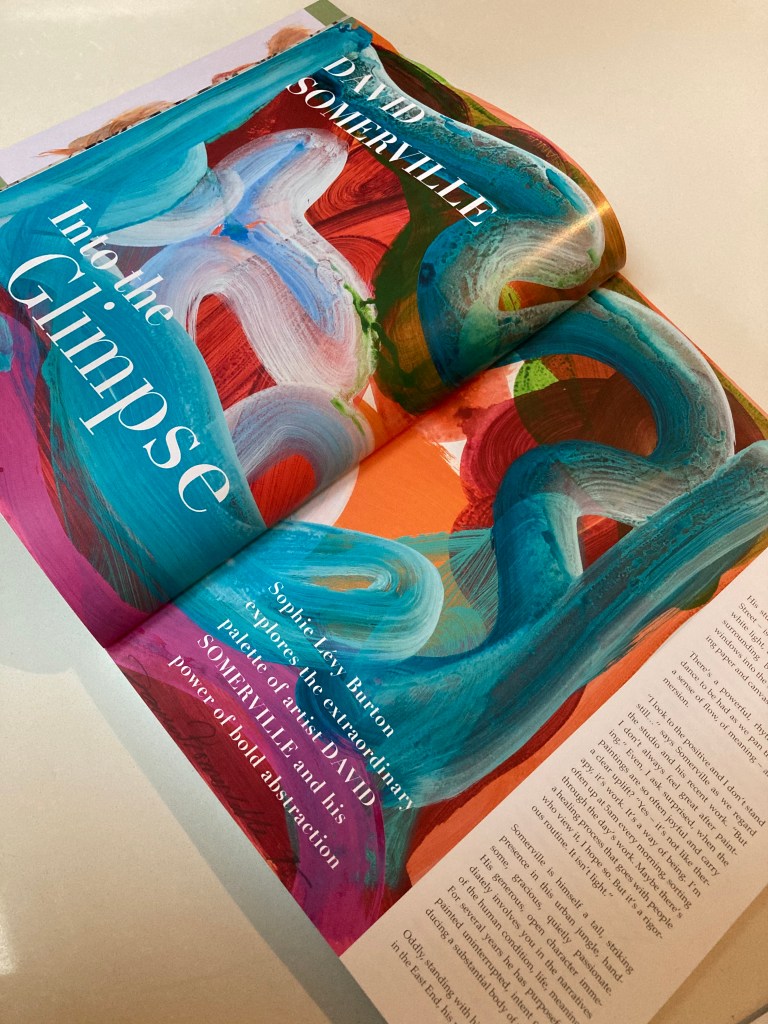
My first book post of 2021 was this stunning new journal MONK. It’s been online for a while now (three issues available at monk.gallery) but this is the first print issue.

And what a delight it is. Beautifully designed, it features fiction and poetry, alongside interviews with artists such as David Somerville (who has provided the cover image), Bloodaxe Books publisher Neil Astley, and Rowan Williams, the former Archbishop of Canterbury.

Editor Sophie Lévy Burton writes in her Introduction that ‘MONK dances around the theology of creativity, of why we artists do what we do’. As a whole, the journal is a fascinating mix of art and spirituality, an ‘imaginarium’.

‘MONK dances around the theology of creativity, of why we artists do what we do’.

Sophie Lévy Burton, Editor

Restrictions permitting, MONK is available to buy in selected bookshops, but can also be ordered online. For further details, see http://monk.gallery/monk-anthology/

Books of the Year 2020

(Photo by Ed Robertson on Unsplash)

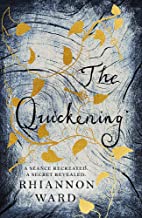
I love a gothic mystery, and The Quickening by Rhiannon Ward (Trapeze) had me gripped. Set in the 1920s, the narrator, a heavily pregnant photographer, is sent to a decaying old pile in Sussex to photograph the contents for auction. But the house was once the scene of a dramatic séance, which is about to be recreated.

My first job in publishing, way back in the mists of time, was on Macmillan’s thirty-volume Dictionary of Art, so I was naturally drawn to Eley Williams’ terrific debut novel The Liar’s Dictionary (Heinemann). It’s ostensibly about the search for fake entries (‘mountweazels’) in an unfinished encyclopedia, but is also a witty love story and a celebration of the power of language.

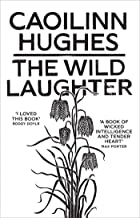
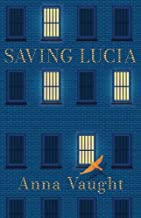
Caoilinn Hughes’ The Wild Laughter (Oneworld) is a tragi-comic story of two brothers trying to deal with their aged father’s dying wishes in post-boom Ireland, while Anna Vaught’s excellent debut novel, Saving Lucia (Bluemoose), tells the story of the unlikely friendship between the Hon Violet Gibson, who attempted to assassinate Mussolini in 1926, and Lucia Joyce, daughter of James, after they were both deemed mentally unstable and sent to the same institution. 

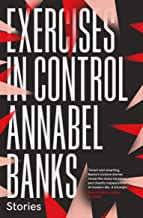
I had never read any of David Constantine’s work before, but his latest collection of short stories, The Dressing-Up Box (Comma Press) left me wondering what had taken me so long. Weird in a very good way, the opening story, in which a group of children barricade themselves in an abandoned house, has haunted me ever since I read it. Annabel Banks’ debut story collection, Exercises in Control (Influx) also stood out.

Despite barely having left the house since March, I was asked by the Sunday Times to do their round-up of the year’s best travel books. There were several gems, but two really stood out. The Lost Pianos of Siberia by Sophy Roberts (Doubleday) is partly a treasure hunt – Roberts was asked by a Mongolian friend to find a piano for her in Siberia – but it’s also a tremendous account of that region’s history and culture, taking in Rasputin, the gulags and the last tsar, among many other wonderful things.

For several years Gareth Rees has run a website called Unofficial Britain (www.unofficialbritain.com), which collects strange stories about places that tend to get overlooked: car parks and flyovers, motorway service stations and tower blocks, industrial estates and power stations. His book, Unofficial Britain: Journeys Through Unexpected Places (Elliot and Thompson), sees him travelling the country in search of more such tales, including the exploits of the Grimsby Ghostbusters, called to deal with a slew of supernatural happenings in the coastal town. These are examples of the new British folklore, he argues, every bit as valuable as the myths and mysteries that swirl around our older buildings and landscapes.
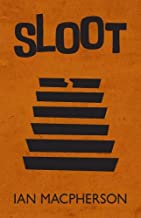
I read some great books this year that were actually published in 2019 and so should technically not appear here, but what the hell – blame it on the pandemic. The Complex by Michael Walters (Salt) is a superbly unsettling, dream-like novel about two families coming together and falling apart in an isolated house, while Ian MacPherson’s Sloot (Bluemoose) is a very funny Celtic screwball noir about a failed stand-up comedian who returns to Dublin for a funeral and gets caught up in a crime caper.

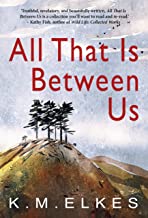
I’m a recent convert to flash fiction, both in my writing and reading, and two collections showcased some of the best examples of the genre: Some Days Are Better Than Ours by Barbara Byar (Reflex) and Ken Elkes’ All That Is Between Us (AdHoc). 

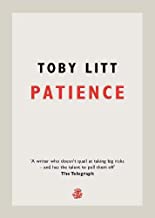
I loved Toby Litt’s Patience (Galley Beggar). Set in an orphanage, it’s narrated by wheelchair-bound Elliott as he observes the daily dramas of his fellow orphans and their carers. Elliott is one of the funniest and most engaging narrators I’ve come across in a long time, and if you want to discover the rules of a game called Sockball, this is the novel for you.
My overall book of the year is Susanna Clarke’s brilliant Piranesi. I loved Jonathan Strange and Mr Norrell and my hopes for her new one were very high. I wasn’t disappointed. Piranesi lives in a house of seemingly endless rooms, filled with huge statues, and with a lower floor inundated by the sea. Every week he meets up with a man known only as the Other. Where is this place? Why are they there? Mysterious and fantastical, it’s a stunning novel. 

A Couple of Reviews

The London Bus Theory also applies to reviews – it’s been a while since I’ve done one, but then along come two in quick succession.

For the Sunday Times, I reviewed James Mumford’s book about new political tribes, Vexed. You can find the review here.

I reviewed Philip Hensher’s new novel, A Small Revolution in Germany, for the Literary Review, and that review can be found here.

Books of the Year 2019

tobias-fischer-ljp-ewA23lc-unsplash

(photo: Tobias Fischer on Unsplash)

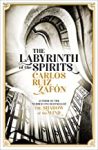
I’ve previously devoured the books in Carlos Ruiz Zafón’s Cemetery of Forgotten Books series (The Shadow of the Wind, The Angel’s Game and The Prisoner of Heaven). Set in Barcelona before, during and after the Spanish Civil War, they are gripping literary thrillers, and the latest instalment, The Labyrinth of the Spirits (Weidenfeld & Nicolson), didn’t disappoint. The books can be read in any order, and for sheer storytelling exuberance they are hard to beat.

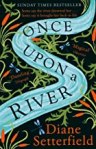
Diane Setterfield made her name with two wonderful gothic mysteries, The Thirteenth Tale and Bellman and Black. Her new novel, Once Upon a River (Doubleday), has a very different but equally evocative atmosphere. At an ancient inn near the Thames in Oxfordshire, the locals pass the time telling stories, but one night they witness something far stranger than any story they can tell: a drowned young girl is pulled out of the river and brought to the inn, only to wake a few hours later.

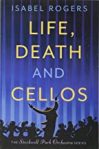
Two really enjoyable debuts: Isabel Rogers’ Life, Death and Cellos (Farrago) is a very funny tale of musical shenanigans set in the febrile atmosphere of the Stockwell Park Orchestra, while Rónán Hession’s Leonard and Hungry Paul (Bluemoose) is a charming and poignant story of two friends seeking to make sense of a confusing world.

Zoë Folbigg’s The Postcard (Aria) is the highly entertaining sequel to her bestselling novel The Note, based on the true-life story of how she met her husband. In The Postcard, Maya and James set off on a round-the-world trip, which tests their relationship to the limits. There’s a particularly grim description of a claustrophobic journey in the luggage rack of an Indian bus which has stuck with me long after reading it, and made me very glad that my backpacking days are long behind me.

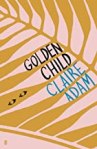
Golden Child by Claire Adam (Faber) tells the story of twin boys in Trinidad, one of whom is considered a genius, while the other is seen as a bit odd. When one of them is kidnapped, it opens up huge fissures in the family. This was one of the most disturbing and affecting novels I have read in a long time, a real gut-wrencher, and hugely deserving of this year’s Desmond Elliott Prize.

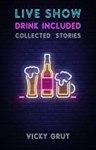
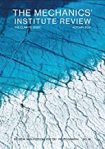
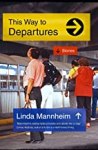
Several short story collections stood out this year. Vicky Grut’s Live Show, Drink Included (Holland Park Press) was shortlisted for the Edge Hill Prize and comprises stories published over a period of almost thirty years. One of the stories, ‘On the Way to the Church’, also featured in this year’s Best British Short Stories (Salt). Linda Mannheim’s This Way to Departures (Influx), Being Various: New Irish Short Stories edited by Lucy Caldwell (Faber), and the latest Mechanics’ Institute Review anthology featured some outstanding examples of the genre.

Szirtes

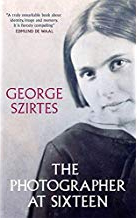
But my book the year is the only non-fiction title in this list: George Szirtes’ The Photographer at Sixteen (MacLehose), a memoir told backwards from the moment of Szirtes’ mother’s death in the 1970s. As we go back in time, we are drawn into some of the most horrific events of the twentieth century, including the Hungarian uprising against communist rule and the Holocaust. It’s a profound book about memory and family, and utterly compelling.

Books of the Year

cesar-viteri-426877-unsplash

(Photo by César Viteri on Unsplash)

First up is the only work of non-fiction that really got me excited this year: Matthew De Abaitua’s Self and I, an account of the time the author spent working as an amanuensis to Will Self back in 1994. The title is, of course, a nod to Withnail and I, and Self’s capriciousness is certainly Withnail-esque. Self often gets a bad press, and De Abaitua doesn’t downplay his idiosyncracies, but he comes across as a highly sympathetic character. Really, though, it’s an account of how De Abaitua tried to get his own literary ambitions going, and any would-be writer will empathise with the long, frustrating and often humiliating experience that entails.

Self and IBest British Short Stories

Now on to the fiction. I’m a great admirer of what Salt Publishing do – they have a wonderfully eclectic and risk-taking list to which I return to again and again. The annual Best British Short Stories, edited by Nicholas Royle, is always great value, and the 2018 edition opened with one of the best stories I’ve read in some considerable time: ‘Paymon’s Trio’ by Colette de Curzon, a tale about a demonic music score. The story of how it came to be published is equally compelling: it was written in 1949 when the author was 22, but because she didn’t know anything about the publishing world and how to get published, she put away in a folder until her daughter found it 67 years later. She lived long enough to see it published as a chapbook by Nightjar Press before passing away in March this year.

The ChameleonThe Hoarder

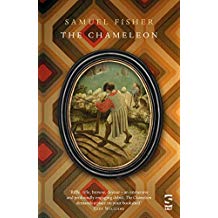
Salt get a very big tick from me for publishing the always excellent Alice Thompson – she didn’t have a book out this year, but I read and loved her 2010 novel The Existential Detective. Salt did give us Samuel Fisher’s novel The Chameleon in 2018. Narrated by a book that can change its cover to blend in to any given situation, the story is both a poignant account of a man on his deathbed and a gripping spy thriller set in Cold War-era Russia.

I was surprised by Jess Kidd’s The Hoarder – not having read any of its reviews or any of her previous work, I picked it up thinking it would be a work of high gothic mystery (a genre I absolutely love). To a certain extent it is – there’s a big sprawling house full of secrets – but it’s got a fantastic blend of dark and knockabout humour that I wasn’t at all expecting. The narrator is often accompanied by apparitions of saints, who comment on her every move – St George is there clad in his armour, while St Valentine observes her attempts at getting a relationship going.

Perfidious AlbionOur Child of the Stars

In my day job as a freelance copy editor and proofreader I’ve worked on some fantastic novels this year. Sam Byers’ Perfidious Albion is a fabulous post-Brexit satire that had me laughing out loud at my desk (great cover too), while Stephen Cox’s Our Child of the Stars is a moving work of sci-fi/fantasy that imagines an orphan alien adopted by an American couple. Sally Rooney’s Normal People has rightly garnered much praise – an intricate and intimate portrayal of a young man and woman and their on-off relationship as they navigate the awkward years of school and university.

RooneyCountry


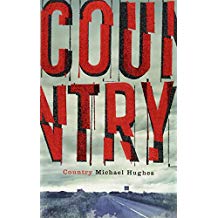
Finally on to two novels set in Northern Ireland. Michael Hughes’s terrific Country re-imagines the Troubles as an Homeric epic, with an IRA sniper cast in the role of Achilles and his enemy, a British soldier named Henry, as Hector. I’ve banged on a fair bit both on this blog and on Twitter about the Booker winner, Anna Burns’s Milkman, so I won’t repeat myself here, except to say that I think it is one of the best novels I have read in years.

Milkman

Broadsword Calling Danny Boy

Geoff Dyer

It’s a long time since I last saw the film Where Eagles Dare – it was probably a rainy Sunday afternoon in the 1980s – but Geoff Dyer’s new book made me want to watch it all over again. His love for the film, formed when he first saw it as a boy, is everywhere evident in his scene-by-scene description, though he doesn’t take it too seriously. He admits that the plot is at times preposterous, with the rucksacks carried by the main characters seemingly bottomless and carrying endless supplies of explosives. He’s very funny too on the two lead actors, Clint Eastwood and Richard Burton, describing the trademark Eastwood squint as he lays waste to hordes of Nazis, and quoting Burton’s diaries, in which he wonders why he agreed to appear in such blockbusters when he could be winning Oscars instead. Read my Sunday Times review here

Matt Haig


At the age of twenty-four, suffering from depression, novelist Matt Haig stood at the edge of a cliff and almost threw himself over. Although he pulled back from suicide the episode heralded years of mental illness. Depression is, he wrote in Reasons to Stay Alive, ‘total exposure. A red-raw naked mind. A skinned personality.’

Haig has written perceptively about mental illness, and both Reasons to Stay Alive and his new book, Notes on a Nervous Planet, have been bestsellers. I reviewed Reasons to Stay Alive when it came out in 2015 (you can read that review here) and I recently reviewed Notes on a Nervous Planet for the Sunday Times – you can read the review here.

A Couple of Reviews

Rock and Roll is Life

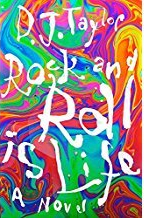
D. J. Taylor’s new novel follows the fortunes and misfortunes of fictional band the Helium Kids, who in the 60s were ‘only marginally less successful than the Beatles and the Rolling Stones’. It’s a funny, vibrant novel and you can read my review in the Literary Review here.


Ten Arguments

Ten Arguments for Deleting Your Social Media Accounts Right Now: Jaron Lanier was one of the pioneers of virtual reality technology, but now he spends much of his time railing against the dangers of the internet and, in this book, social media. I have a lot of sympathy for his viewpoint, as I have always been ambivalent about social media: I have no Facebook or Instagram account and came to Twitter very late. However, his book has not quite convinced me to delete my Twitter account. You can read my Sunday Times review here.