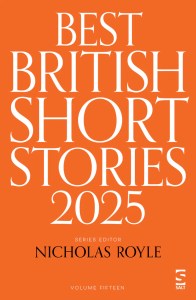
It’s publication day for Best British Short Stories 2025, which includes my story ‘Ghost Walks’! Available from all good bookshops, or from the publisher Salt Books.
“Another unusually surprising story was Ian Critchley’s ‘Ghost Walks’, telling the story of a woman having a moment of Déjà vu as she revisits York, where she once spent her student days and met her future husband. What, at surface level, can be read as a deceptively simple ghost story turns into a complex exploration of identity, marriage and retrospection on the lives we thought we would live in the halcyon days of youth.”
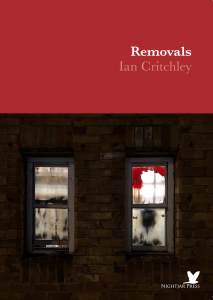
‘What a clever, intriguing chapbook by Ian Critchley. ‘Removals’, published by Nightjar Press achieves so much in just a few pages. Draws you in, then pulls you somewhere else and cleverly turns you back on yourself. Like fine tailoring: precise, deceptive, with the seams hidden.’ Rónán Hession, author of Leonard and Hungry Paul
‘With its crisp, humorous prose and excellent dialogue, in less than eight pages Ian Critchley’s Removals (2024) manages to pose a tempting question about life, the universe and everything that might have you thinking for days’ Giselle Leeb, Interzone
‘an eerie and compelling short story’ Margo Laurie, Goodreads, 5 stars
‘A magnificently eerie story’ David Harris, Blue Book Balloon; also 5 star review on Goodreads
‘Another terrific title from Nightjar Press; a crisply effective chiller from the excellent Ian Critchley’ Andy Humphrey
First, I want to highlight the fantastic work done by independent publishers. Over the past few years, and facing increasingly difficult challenges, they have consistently produced some of the best and most interesting fiction around.
Ashley Stokes’ Gigantic (Unsung Stories) tells the tale of Kevin Stubbs and the Gigantopithecus Intelligence Team (GIT) as they attempt to prove or disprove the existence of a Bigfoot in Sutton. Kevin is a very funny narrator, and in its mix of true believers and sceptics it’s like an episode of X-Files transported to Surrey (and I mean peak X-Files, not the awful later episodes). The Dig Street Festival by Chris Walsh (Louise Walters Books) follows the comic misfortunes of a trio of misfits in the fictional London Borough of Leytonstow as they battle their boss, landlord, and social hardship to organise an ‘urban love revolution’.
A couple of years ago Bluemoose published Leonard and Hungry Paul by Rónán Hession, which deservedly became a word-of-mouth success. Hession’s follow-up, Panenka, is a similarly engaging story about a man whose life was changed irrevocably when he missed a penalty for his team by attempting a ‘panenka’, a delicate chipped shot that leaves the kicker embarrassingly exposed if executed badly (some successful examples can be seen here: https://www.youtube.com/watch?v=i4c7Ypx89Rs). Even if you aren’t into football at all, there’s much to enjoy here: like Leonard and Hungry Paul, it’s a poignant story of love and loss.
Cold New Climate by Isobel Wohl was the first publication from a brand new publisher, Weatherglass Books. On the surface it’s a story of New York relationships, but there is a disturbing undercurrent running through it that eventually breaks out into one of the most disturbing endings I’ve read in a long time. The online literary magazine Storgy have recently branched out into publishing books, and I very much enjoyed Parade by Michael Graves, a Florida-set novel of faith, sex and drugs.
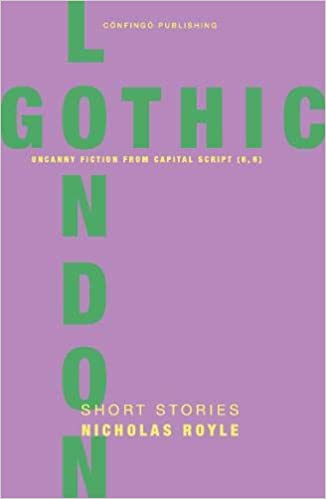
I read fewer short stories than I meant to this year, but my two favourite collections were Nicholas Royle’s London Gothic (Confingo) and Percival Everett’s Damned If I Do (Influx). Royle’s is the first of a planned series exploring the mysterious corners of different cities, with Manchester and Paris to come. The opening story of Everett’s collection, ‘The Fix’, is especially brilliant. A stranger is taken in by the owner of a sandwich shop and proceeds to fix broken items brought to him by people in the neighbourhood. His abilities soon exceed the merely practical, however, and come to seem increasingly miraculous, with tragic consequences.
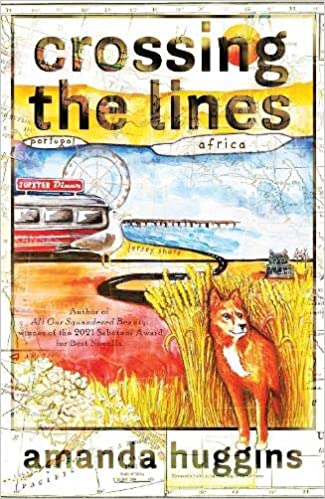
I also loved the debut collection by Rhiannon Lewis, I Am The Mask Maker, published by the indie Victorina Press. They also published the wonderful new novella by Amanda Huggins, Crossing the Lines, based on her Costa-shortlisted story ‘Red’.
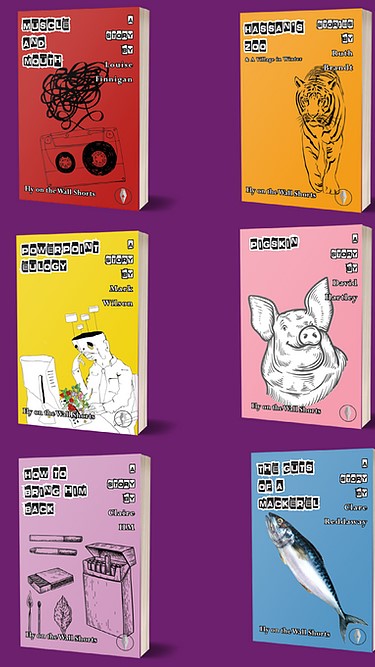
Fly on the Wall Press is a not-for-profit publisher based in Manchester, producing short stories and poetry that engage with political and social issues. This year they published a season of Fly on the Wall Shorts – six outstanding stories featuring pigs, tigers and Powerpoints among many other rich things. These are great examples of something that’s unfortunately all too rare: short stories published in single pamphlets. Nightjar Press (https://nightjarpress.weebly.com) also do sterling work in this area with their ongoing series of uncanny tales, while new kid on the block Seventy2One (https://massiveoverheads.com/seventy2one-books/) are planning to publish chapbooks amongst other things, but I’d love to see more.
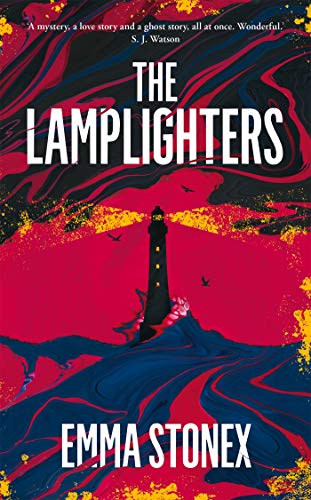
I also read some great books from the big publishers. The first two novels I bought when the bookshops reopened post-lockdown were both exceptional. Emma Stonex’s The Lamplighters (Picador) is based on a true story: in 1900 the three keepers of a lighthouse on the Flannan Isles in the Outer Hebrides disappeared without trace. Stonex transports the story to 1970s Cornwall and weaves a haunting mystery around the three men, and the women they have left behind. Luckenbooth by Jenni Fagan (Heinemann) is set at different periods during the twentieth century in an Edinburgh tenement building, whose inhabitants include a Beat poet, a psychic and the devil’s daughter. A fantastically strange novel that had me hooked.
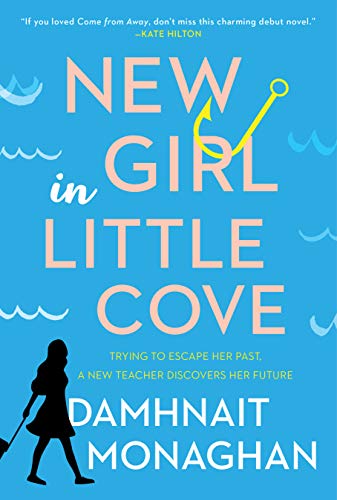
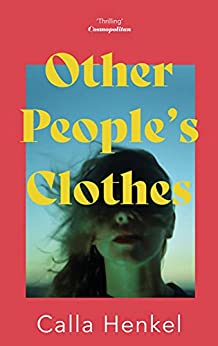
Like most people, I didn’t travel far on my holidays, but I took two books with me that transported me to Newfoundland and Berlin. New Girl in Little Cove by Damhnait Monaghan (HarperCollins) charts the trials and tribulations of a teacher who moves from Toronto to a Catholic school in Newfoundland and struggles to integrate into the local community. But what is she running away from? Calla Henkel’s Other People’s Clothes (Sceptre) also has fish-out-water characters, with two American art students renting a magnificent apartment in Berlin from a crime writer, who may or may not have sinister plans for them.
Zoë Folbigg’s fourth novel The Night We Met (Aria) is her best yet – a tragic romance filled with warmth and humour. Last but definitely not least is Iron Annie (Bloomsbury), the debut novel by Luke Cassidy, a riotous story of love and drug running in Ireland and England.
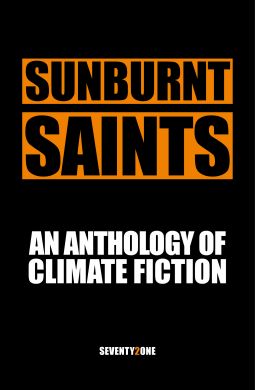
Sunburnt Saints is published today! It’s a fantastic achievement by editors Andrew Leach and Hannah Persaud to get this anthology from conception to publication in just a few months.
My contribution, ‘Outage’, is a story of love and darkness, and I’m very proud and honoured to be among so many talented writers.
Many thanks to writer and broadcaster Antonia Honeywell for dedicating her latest Chiltern Voice Book Club programme last Sunday to Seventy2One’s new anthology Sunburnt Saints. I was one of several contributors interviewed for the show, and we all got to choose a favourite song. So tune into the podcast to find out our picks. Oh, and to hear us talking about writing, of course: https://podcasts.apple.com/gb/podcast/chiltern-voice-book-club/id1540563708?i=1000543272780
Antonia’s show is a great mix of book chat and music, and she’s got some fantastic guests coming up. It’s on http://chilternvoice.fm every Sunday 2pm-4pm, with the podcast landing shortly afterwards.
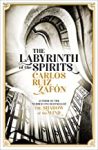
I’ve previously devoured the books in Carlos Ruiz Zafón’s Cemetery of Forgotten Books series (The Shadow of the Wind, The Angel’s Game and The Prisoner of Heaven). Set in Barcelona before, during and after the Spanish Civil War, they are gripping literary thrillers, and the latest instalment, The Labyrinth of the Spirits (Weidenfeld & Nicolson), didn’t disappoint. The books can be read in any order, and for sheer storytelling exuberance they are hard to beat.
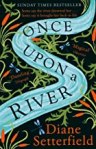
Diane Setterfield made her name with two wonderful gothic mysteries, The Thirteenth Tale and Bellman and Black. Her new novel, Once Upon a River (Doubleday), has a very different but equally evocative atmosphere. At an ancient inn near the Thames in Oxfordshire, the locals pass the time telling stories, but one night they witness something far stranger than any story they can tell: a drowned young girl is pulled out of the river and brought to the inn, only to wake a few hours later.
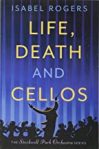
Two really enjoyable debuts: Isabel Rogers’ Life, Death and Cellos (Farrago) is a very funny tale of musical shenanigans set in the febrile atmosphere of the Stockwell Park Orchestra, while Rónán Hession’s Leonard and Hungry Paul (Bluemoose) is a charming and poignant story of two friends seeking to make sense of a confusing world.
Zoë Folbigg’s The Postcard (Aria) is the highly entertaining sequel to her bestselling novel The Note, based on the true-life story of how she met her husband. In The Postcard, Maya and James set off on a round-the-world trip, which tests their relationship to the limits. There’s a particularly grim description of a claustrophobic journey in the luggage rack of an Indian bus which has stuck with me long after reading it, and made me very glad that my backpacking days are long behind me.
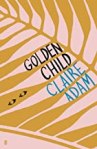
Golden Child by Claire Adam (Faber) tells the story of twin boys in Trinidad, one of whom is considered a genius, while the other is seen as a bit odd. When one of them is kidnapped, it opens up huge fissures in the family. This was one of the most disturbing and affecting novels I have read in a long time, a real gut-wrencher, and hugely deserving of this year’s Desmond Elliott Prize.
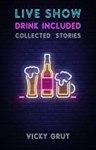
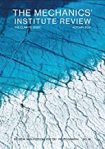
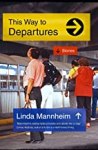
Several short story collections stood out this year. Vicky Grut’s Live Show, Drink Included (Holland Park Press) was shortlisted for the Edge Hill Prize and comprises stories published over a period of almost thirty years. One of the stories, ‘On the Way to the Church’, also featured in this year’s Best British Short Stories (Salt). Linda Mannheim’s This Way to Departures (Influx), Being Various: New Irish Short Stories edited by Lucy Caldwell (Faber), and the latest Mechanics’ Institute Review anthology featured some outstanding examples of the genre.
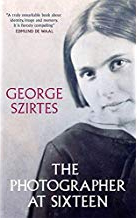
But my book the year is the only non-fiction title in this list: George Szirtes’ The Photographer at Sixteen (MacLehose), a memoir told backwards from the moment of Szirtes’ mother’s death in the 1970s. As we go back in time, we are drawn into some of the most horrific events of the twentieth century, including the Hungarian uprising against communist rule and the Holocaust. It’s a profound book about memory and family, and utterly compelling.
I never keep track of how many books I read in a year, but one thing is for sure: it’s never enough. I spend most of the year thinking how great it would be to finally read that novel by so-and-so, or re-read such-and-such, or even tackle Proust, but time is short and seems to get ever shorter, while my to-be-read pile gets ever higher.
I have, however, read some excellent books this year. One of the great things about reviewing is that I often discover authors and books I would never have otherwise read. Highlights this year include Andrew O’Hagan’s book of essays The Secret Life, which contains a gripping account of his abortive collaboration on Julian Assange’s autobiography; Philip Hoare’s wonderful RISINGTIDEFALLINGSTAR (though I never did work out why the title is all in caps and run on like that); and Richard Ford’s moving memoir about his parents, Between Them.
Fiction-wise, the novel I loved most this year was actually published last year: Deborah Levy’s Hot Milk. I had never read any of her books before, so this was a real revelation: a hypnotic read, drenched in Spanish sunshine, and quite unlike anything else I have come across. I also very much enjoyed Amanda Craig’s The Lie of the Land and Paul Theroux’s Mother Land.
But my overall book of the year was one of the first I read back in January: Xiaolu Guo’s terrific Once Upon a Time in the East, her memoir of growing up in an impoverished Chinese village. I mentioned earlier in the year in this blog that it would definitely be a contender for book of the year, and as it turns out nothing since has quite matched it. It very much deserves its shortlisting in the biography category of this year’s Costa Awards, and I hope it wins.











 Ian Critchley