Books of the Year 2020

(Photo by Ed Robertson on Unsplash)

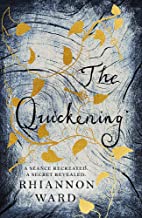
I love a gothic mystery, and The Quickening by Rhiannon Ward (Trapeze) had me gripped. Set in the 1920s, the narrator, a heavily pregnant photographer, is sent to a decaying old pile in Sussex to photograph the contents for auction. But the house was once the scene of a dramatic séance, which is about to be recreated.

My first job in publishing, way back in the mists of time, was on Macmillan’s thirty-volume Dictionary of Art, so I was naturally drawn to Eley Williams’ terrific debut novel The Liar’s Dictionary (Heinemann). It’s ostensibly about the search for fake entries (‘mountweazels’) in an unfinished encyclopedia, but is also a witty love story and a celebration of the power of language.
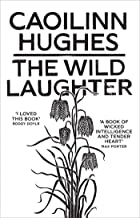
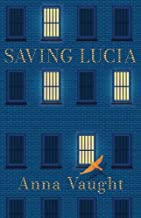
Caoilinn Hughes’ The Wild Laughter (Oneworld) is a tragi-comic story of two brothers trying to deal with their aged father’s dying wishes in post-boom Ireland, while Anna Vaught’s excellent debut novel, Saving Lucia (Bluemoose), tells the story of the unlikely friendship between the Hon Violet Gibson, who attempted to assassinate Mussolini in 1926, and Lucia Joyce, daughter of James, after they were both deemed mentally unstable and sent to the same institution. 

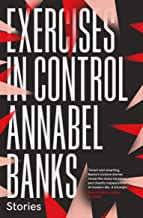
I had never read any of David Constantine’s work before, but his latest collection of short stories, The Dressing-Up Box (Comma Press) left me wondering what had taken me so long. Weird in a very good way, the opening story, in which a group of children barricade themselves in an abandoned house, has haunted me ever since I read it. Annabel Banks’ debut story collection, Exercises in Control (Influx) also stood out.

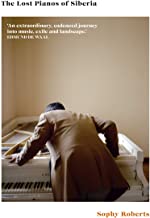
Despite barely having left the house since March, I was asked by the Sunday Times to do their round-up of the year’s best travel books. There were several gems, but two really stood out. The Lost Pianos of Siberia by Sophy Roberts (Doubleday) is partly a treasure hunt – Roberts was asked by a Mongolian friend to find a piano for her in Siberia – but it’s also a tremendous account of that region’s history and culture, taking in Rasputin, the gulags and the last tsar, among many other wonderful things.

For several years Gareth Rees has run a website called Unofficial Britain (www.unofficialbritain.com), which collects strange stories about places that tend to get overlooked: car parks and flyovers, motorway service stations and tower blocks, industrial estates and power stations. His book, Unofficial Britain: Journeys Through Unexpected Places (Elliot and Thompson), sees him travelling the country in search of more such tales, including the exploits of the Grimsby Ghostbusters, called to deal with a slew of supernatural happenings in the coastal town. These are examples of the new British folklore, he argues, every bit as valuable as the myths and mysteries that swirl around our older buildings and landscapes.

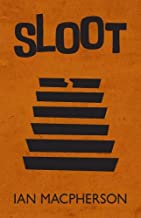
I read some great books this year that were actually published in 2019 and so should technically not appear here, but what the hell – blame it on the pandemic. The Complex by Michael Walters (Salt) is a superbly unsettling, dream-like novel about two families coming together and falling apart in an isolated house, while Ian MacPherson’s Sloot (Bluemoose) is a very funny Celtic screwball noir about a failed stand-up comedian who returns to Dublin for a funeral and gets caught up in a crime caper.

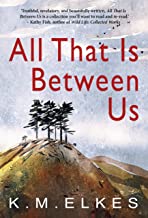
I’m a recent convert to flash fiction, both in my writing and reading, and two collections showcased some of the best examples of the genre: Some Days Are Better Than Ours by Barbara Byar (Reflex) and Ken Elkes’ All That Is Between Us (AdHoc). 

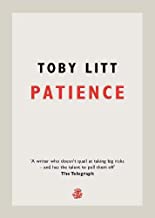
I loved Toby Litt’s Patience (Galley Beggar). Set in an orphanage, it’s narrated by wheelchair-bound Elliott as he observes the daily dramas of his fellow orphans and their carers. Elliott is one of the funniest and most engaging narrators I’ve come across in a long time, and if you want to discover the rules of a game called Sockball, this is the novel for you.

My overall book of the year is Susanna Clarke’s brilliant Piranesi. I loved Jonathan Strange and Mr Norrell and my hopes for her new one were very high. I wasn’t disappointed. Piranesi lives in a house of seemingly endless rooms, filled with huge statues, and with a lower floor inundated by the sea. Every week he meets up with a man known only as the Other. Where is this place? Why are they there? Mysterious and fantastical, it’s a stunning novel. 

Cowboys and Croquet: How I Wrote ‘The Kid’

katie-burkhart-QuyLe826f1w-unsplash

(Photo by Katie Burkhart on Unsplash)

It began, as it often does, with a newspaper article. In 2010 a collector found a photograph that he believed showed Billy the Kid playing croquet with members of his gang. If true (and the jury is still out, I think) this would have been only the second authenticated photograph of The Kid. Even if it’s not him, I was struck by the fact that this game, which I’d always thought was only played by English people on immaculate lawns, was also popular in nineteenth-century America.

It’s these kinds of unexpected juxtapositions that often spark stories for me. I knew very little about Billy, and even less about American croquet, and I’d also never written a piece of historical fiction before, but I couldn’t get the image out of my head.

So I did some research. There’s not much historical information about croquet in America but it seems it was a reasonably popular game in the 1870s, including among poorer households and Native Americans. I found an interview with an artist who painted images of that period, including one of a Native American holding a croquet mallet. One thing I did discover was that Americans call the croquet hoops ‘wickets’.

There is of course a lot of information about Billy the Kid. His story has been told so many times already, including in the Young Guns film, that I wanted to try and find a different angle. I discovered that he had a younger brother called Joe, and I became interested in that dynamic – what did Joe think of his elder brother? If Billy was ‘the Kid’, what did that make his kid brother?

The story was beginning to come together, but it wasn’t until I found out that Billy had been employed by an English ranch owner that the final piece of the puzzle was in place. It was the murder of this Englishman by a rival gang that precipitated the sequence of bloody events that made Billy infamous (and led to his own death), so what if I set my story before all that kicked off, in the lull before that storm? And how would this upper-middle-class Englishman react to the notion of croquet being played by poor farmers in New Mexico, without a manicured lawn in sight?

It’s Joe’s story, really. It’s about the real kid and his mixed feelings regarding his elder brother, who has already killed a man. What does Joe want to do with his life? Does he want to stay and milk cows on a farm, or go off and lead a potentially much more exhilarating, but risky existence with his brother? This dilemma became the heart of the story.

You can read ‘The Kid’ here.


The Kid

cowboy-283449_1920

(Image by Donna H from Pixabay)

Back in 2017 when I plucked up the courage to start writing and submitting short stories again after a 14-year hiatus, Storgy were the first literary magazine to take something by me (‘Mr DIY’). So I’m really pleased to have a new story published by them – and after a lifetime of writing contemporary stories, it’s my first piece of historical fiction. ‘The Kid’ is set in New Mexico, 1877, and you can read it here.

Books of the Year 2019

tobias-fischer-ljp-ewA23lc-unsplash

(photo: Tobias Fischer on Unsplash)

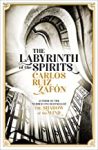
I’ve previously devoured the books in Carlos Ruiz Zafón’s Cemetery of Forgotten Books series (The Shadow of the Wind, The Angel’s Game and The Prisoner of Heaven). Set in Barcelona before, during and after the Spanish Civil War, they are gripping literary thrillers, and the latest instalment, The Labyrinth of the Spirits (Weidenfeld & Nicolson), didn’t disappoint. The books can be read in any order, and for sheer storytelling exuberance they are hard to beat.

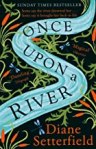
Diane Setterfield made her name with two wonderful gothic mysteries, The Thirteenth Tale and Bellman and Black. Her new novel, Once Upon a River (Doubleday), has a very different but equally evocative atmosphere. At an ancient inn near the Thames in Oxfordshire, the locals pass the time telling stories, but one night they witness something far stranger than any story they can tell: a drowned young girl is pulled out of the river and brought to the inn, only to wake a few hours later.

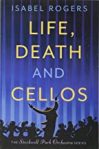
Two really enjoyable debuts: Isabel Rogers’ Life, Death and Cellos (Farrago) is a very funny tale of musical shenanigans set in the febrile atmosphere of the Stockwell Park Orchestra, while Rónán Hession’s Leonard and Hungry Paul (Bluemoose) is a charming and poignant story of two friends seeking to make sense of a confusing world.

Zoë Folbigg’s The Postcard (Aria) is the highly entertaining sequel to her bestselling novel The Note, based on the true-life story of how she met her husband. In The Postcard, Maya and James set off on a round-the-world trip, which tests their relationship to the limits. There’s a particularly grim description of a claustrophobic journey in the luggage rack of an Indian bus which has stuck with me long after reading it, and made me very glad that my backpacking days are long behind me.

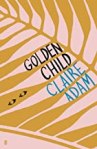
Golden Child by Claire Adam (Faber) tells the story of twin boys in Trinidad, one of whom is considered a genius, while the other is seen as a bit odd. When one of them is kidnapped, it opens up huge fissures in the family. This was one of the most disturbing and affecting novels I have read in a long time, a real gut-wrencher, and hugely deserving of this year’s Desmond Elliott Prize.

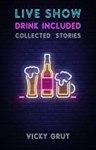
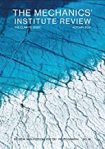
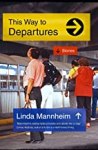
Several short story collections stood out this year. Vicky Grut’s Live Show, Drink Included (Holland Park Press) was shortlisted for the Edge Hill Prize and comprises stories published over a period of almost thirty years. One of the stories, ‘On the Way to the Church’, also featured in this year’s Best British Short Stories (Salt). Linda Mannheim’s This Way to Departures (Influx), Being Various: New Irish Short Stories edited by Lucy Caldwell (Faber), and the latest Mechanics’ Institute Review anthology featured some outstanding examples of the genre.

Szirtes

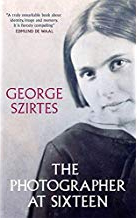
But my book the year is the only non-fiction title in this list: George Szirtes’ The Photographer at Sixteen (MacLehose), a memoir told backwards from the moment of Szirtes’ mother’s death in the 1970s. As we go back in time, we are drawn into some of the most horrific events of the twentieth century, including the Hungarian uprising against communist rule and the Holocaust. It’s a profound book about memory and family, and utterly compelling.

I had flashes …

I’m a relative newcomer to flash fiction – in fact, before I joined Twitter in 2016 I don’t think I had ever even heard of it, and I was certainly unprepared for how huge it is as a genre among writers. Over the past couple of years I’ve been trying to work on a few of these very short stories (fewer than 1000 words) and this week two have been accepted for publication – one by Lucent Dreaming and the other by Ellipsis Zine. These should be out in the next few weeks, so I’ll post links when the time comes.

Website Review: Jericho Writers

lauren-mancke-60627-unsplash

(Photo by Lauren Mancke on Unsplash)

Around the turn of the millennium I reached a crossroads with my writing. I had written two unpublished novels and was working on a third, one that I truly loved, but which was pushing me right up against the limits of my abilities. I knew I needed help, but had no idea where to turn.

That was when I discovered the Writers’ Workshop, run by the novelist Harry Bingham. Their website was full of useful information and I decided to get a critique of my novel from one of their editors. This was one of the best things I have done in my writing career. It gave me encouragement when I needed it most, and ideas for how to improve the book. And although that book has also not found a publisher, I did go on to secure an agent.

Accepting I needed help was one of the big lessons I learned, and it’s one that has stuck with me to this day. Even after over twenty years of pretty solid writing, I often feel as if I have no idea what I’m doing, and I’m still benefitting from the good advice that’s out there, if you know where to find it. Writers’ Workshop has recently morphed into Jericho Writers, and it remains one of the best writing sites around, though much has changed – not least the fact that there is now a members-only area, available via a paid subscription.

There is still lots of great advice available for free on the website. The Library section has posts such ‘How to Plot’ and ‘How to Get Published’, as well as ‘The 15 Most Common Mistakes Made By New Writers Writing Their First Novel’ (and this is not just for those writing their first novel).

The big question is whether the paid-for content provides value for money. I think it does. The members’ area includes videos from industry experts, including an entire ‘How to Write a Novel’ course, masterclasses on various writing techniques, such as creating vibrant characters, and a whole series on self-publishing. There are also in-depth interviews with agents, publishers and writers. The calibre of the contributors is high – for example, Debi Alper, one of the best editors in the game, provides a masterclass on how to edit your novel.

The ‘Conversations’ section allows members to pitch their novels live and direct to agents, while the ‘Ask Jericho’ feature gives members the opportunity to ask any question or to have their query letter evaluated. If you are looking for an agent, ‘Agent Match’ provides a database of agents, searchable on different criteria – size of agency, number of clients and so on. Members also receive discounts on the site’s other services, such as manuscript evaluation.

I have a couple of reservations. One is technical: if I go from the Members’ area to the free Library section, it logs me out of the Members’ section and I have to log back in again. The other is a slightly bigger niggle: the ‘Townhouse’ feature is a forum where members can discuss writing tips, agents and publishers, and self-publishing, and get peer review on their work. This was one of my favourite parts of the old Writers’ Workshop site, but putting it in the Members’ Area means that, currently, there are not the same numbers of people taking part. Obviously that will improve once the membership increases, but I did wonder if this was one area which would be more beneficial even to members if it was on the free part of the site. It’s a shame too that all the threads from the old site are no longer available.

Overall, though, compared with the cost of attending festivals and workshops, and especially compared with doing a creative writing MA, Jericho Writers offers a relatively inexpensive way of getting good-quality help. It’s like a whole festival of writing that you can enjoy in your own home, at your own pace.

Find out more about Jericho Writers here

Mechanics’ Institute Review #15

DkyhG5vXgAAjIfv

Lots of exciting things are being planned as we build up to the publication of the new Mechanics’ Institute Review anthology, in which my story ‘The Hole’ will appear.

Publication date looks set for 25 September, and the editors have revealed a tease of the cover (see image). There are also some upcoming events. First up is a ‘Reading Aloud’ workshop to get all the contributors primed for some public readings.

I’ve read my work in public a couple of times – firstly in conjunction with my first published story way back in 1992, and more recently as part of the Faber Academy course – but it’s still an extremely nerve-wracking experience, and so hopefully the more practice I can get the less terrifying it will be.

We’ll soon see whether it has worked, as I’ve volunteered to read at an ‘MIR Live’ event in London on 1 October.

On 20 September there will be an ‘Open the Box’ evening, where the authors get a chance to meet each other and also get their hands on a print copy of the anthology for the first time.

Then a few days later there will be the launch party. I recently realised to my horror that it has been 19 years since my last appearance in an anthology – in one of the Time Out books edited by Nicholas Royle, a brilliant writer and champion of short stories. Unfortunately I had to miss the launch party for that and I’ve regretted it ever since. So this time round I’m determined to be there (did somebody say free wine?).